Tuesday, July 17, 2012

A faith subject to revision

"These questions are a reminder that our epistemic 'levels' are really just convenient points along a continuum and that, for any individual believer, the location of any particular claim along that continuum is subject to revision in light of new arguments, new experiences, and new discoveries. One can say with some confidence, at any particular moment, which claims appear to be better justified than others, but one must also acknowledge the ongoing religious and theoretical attraction of claims that one cannot, at the moment, find fully convincing. The upshot is a necessary humility and an openness to the claims of the tradition - and the criticisms of those outside it - that, in our view, belong to the essence of what is traditionally known as a life of faith."

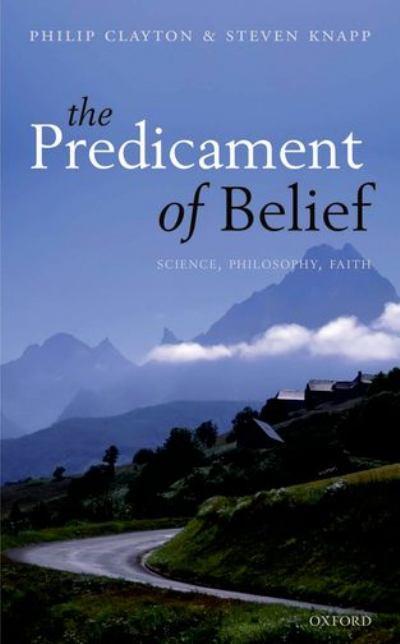
Philip Clayton and Steven Knapp, The Predicament of Belief: Science, Philosophy, Faith, 134-135

(Image)

Monday, July 16, 2012

Philip Clayton and Steven Knapp on the Case for Christian Belief

"We do agree with many commentators today that it is difficult to make the case for Christian belief - difficult, that is, to make a case that is, or even should be, convincing to those who do not already participate in the experience of Christian faith and practice. What separates us from Christian agnostics is, first, our unwillingness to decide in advance that no progress in assessing Christian claims can be made and, second, our conviction that pursuing the question of what is really the case, what is really true, is not just an intellectual game but an urgent religious responsibility. In fact, it is a responsibility precisely for those who find themselves, as we do, continually drawn to what it is least misleading, perhaps, to call simply 'the gospel.' Again, that conviction separates us just as much from the Christian fideist - the person who thinks we should just take everything 'on faith' - as it does from the Christian agnostic. As different as they may be in other respects, the fideists and the agnostic are equally 'dogmatic' to the extent that they are both closed to the possibility of ever making progress in finding out whether Christian claims may actually be true, and both unwilling to let the content of their beliefs be affected by new ideas or discoveries." 

Philip Clayton and Steven Knapp, The Predicament of Belief: Science, Philosophy, and Faith 19-20

Monday, July 09, 2012

Myths about U.S. Immigration, (and more)

This quarters NCM Magazine is dedicated to immigration, taking its ques from that oft (and rightly so) quoted passage, "I was a stranger and you welcomed me." Among many challenging articles was one by Rev. Gabriel Salguero. He and his wife are co-pastors of Lamb's Manhattan Church of the Nazarene. Here are several highlights:

- "Too many pastors and laity alike go to their favorite politician or media pundit instead of scripture to form opinions on justice in immigration."

- "We have to ask then, how do we balance respect for the government's rule of law with welcoming the stranger? In other words, how do we live out Romans 13:1 - 'Let every person be subject to the governing authorities' - with Matthew 25:35 - 'I was a stranger and you welcomed me'? As a congregation, we are learning to let both of these Scripture passages disciple us."

- "At our church, we have undocumented immigrants among us. We believe membership in the body of Christ is not a matter of where you are born, what language you speak, or what your citizenship is. It is about faith in Christ."

- "Why do we do this? It is because these men, women, and children are our brothers and sisters. In fact, many of them have U.S.-born children. Those children are our children, and we are working to keep families together. It is one of the reasons we want humane and comprehensive immigration reform."

Attached to the article are four myths about U.S. immigration that I also think are worth highlighting as well:

- Myth #1: Immigrants don't pay taxes.
Reality: Most immigrants - including many who are undocumented - pay income, property, sales, and payroll taxes.

- Myth #2: Immigrants come to the United States to take welfare.
Reality: Most often, immigrants come to the United States to work, reunite with family members, or escape violence. the amount of taxes immigrants pay overall actually far outweights their use of public benefits.

- Myth #3: Immigrants send all their money back to their home countries.
Reality: Though some immigrants send remittances to family members in their home countries, the amount immigrants overall contribute to local economies through consumer spending and paying business and personal taxes dramatically exceeds the amount sent elsewhere.

- Myth #4: Most immigrants cross the border illegally.
Reality: About two-thirds of immigrants are in the U.S legally with visas or as naturalized citizens. Of the third who are undocumented, 40 percent originally came legally but overstayed their temporary visas.

The magazine also offers a link to a website where people can go to learn how to advocate for immigrants in their community - ncm.org/immigration. Actually, it's must more than that. It's not just for those who are in favor of advocacy. It's a great resource for opening up a broader conversation with those who might not agree with some of things that I have highlighted above.

As an Associate Pastor on staff at a church in a neighborhood where immigration is a central issue, this magazine has been extremely insightful, provoking me to prayer and action.

Thanks, NCM!

Friday, July 06, 2012

Too Many Trilogies?

I just found out that The Amazing Spider Man is going to be made into a trilogy. This doesn't surprise me. The self-contained, one time only movie is a relic. If a trilogy isn't a part of the original conversation then you should be worried as a filmmaker. True, the stand-alones are still made, but they mostly fall into either one of two categories: suck or success. If there was a third category it be called forgotten. Especially with comic movies, it's trilogy of bust.

I'm not a hater of this idea. I like a good trilogy as much as the next person, I just want to see them done well. What I really like, though, is a good story, which is why Star Wars (the original three), The Lord of the Rings, The Bourne films, Harry Potter, and The Millenium Trilogy are good trilogies to me. They are good stories. Each film builds into the next as a large overarching story unfolds. The Lord of the Rings, I think, did it best. It's like watching a fourteen hour long movie and yet you can do it in three parts. You get enough resolution along the way so that you don't feel like you have to watch them all in a row every time, but you get really to know the characters, watch them develop, and live long enough in another world that you feel at home there. That's pretty powerful. There's a whole thing out there about how "we" as a culture have lost our ability to stay focused on one thing for a long time, thus, we don't write long novels or sit down to long films, generally speaking. Two hundred pages or ninety minutes is about all we got. Of course, Twilight and Harry Potter are the exceptions, or romance novels, but then there's a whole other thing going on there.

A trilogy, to me, is a long story. Most so-called trilogies are really just collections of films revolving around the same character without an overarching storyline. That's fine. I like those too: Sherlock Holmes, Mission Impossible, Die Hard, Indiana Jones, Toy Story (yes, I don't think it's a trilogy), and Back to the Future. I suppose I want the distinction because I really like a good story and I don't want people to be confused or unaware that there is a difference. Stand-alone's are fine but putting three of them together and calling it a trilogy doesn't mean that it's one story. I think there is and I think film has the ability to help us see just what exactly is the power of a good story, one that sucks you in as it gives shape and form to a whole other reality. I'd actually like to see people sitting down to write more trilogies, an eight to nine hour imaginative saga. How awesome is it going to be when The Dark Tower series comes to film!

I'm sort of ranting, mostly at the how flippantly studios throw around the world trilogy simply because we think that makes it better. We have to be smarter as film-goers. If the first movie was decent but not great and there's a second one on the way, wait until it comes out at Redbox, or borrow it from a friend. All they want is our money and we get tricked into thinking that a trilogy means it's better, with question.

Someone could probably argue the other way about trilogy and that's fine. I mostly want to see people go all the way with trilogy. Leave us hanging a bit after the first and second films for the grand conclusion. It's better that way.

Monday, June 25, 2012

"Peace is a result not a goal"

"The first thing we need to recover is the knowledge that peace is a result not a goal. Peace is the result of years in a good relationship. Marriages shaped by love result in peace. Instead of focusing on having a good marriage, a husband and a wife who focus on loving one another will have a marriage of peace. Societies that are shaped by justice and love becomes societies marked by peace. Peace, then, should not be our goal; love is. Love is the hard gritty work; love is the way of the cross that produces peace. When we love, justice and peace bubble up as the results of love. People who want peace but who aren't willing to love will not find peace. People who love find peace, whether they think about it or not."

- Scot McKnight, One.Life: Jesus Calls, We Follow, 73

(image via cherrybam.com)

Wednesday, June 20, 2012

Two by Mumford and Sons: Come Thou Fount & Awake My Soul

Dang, I just love this. These guys are great and a new album is set for release in September. I dare you not to be utterly moved by the song in the second half of the second video. Between these two videos, this might be the best fifteen minutes of your week.


Tuesday, June 19, 2012

On Reading the Bible, and Some Resources

Every so often we do a series on the bible where we interact with questions about what the bible is, what it's for, how it's authoritative, and how to read it (hermeneutics).

In the last couple years I've been challenged by Alister McGrath's work on Christianity's Dangerous Idea, which was, essentially, to put the bible in the hands of the people, "that Christians have the right to interpret the bible for themselves," and the subsequent fallout/repercussions. As a Wesleyan, I try to never forget the beautiful tension that exists in the relationship between Scripture, tradition, reason, and experience, which means that reading for ourselves never means that we read it by ourselves.

The thought I'm entertaining right now, to put it very, very simply, is this: It's not that I think everyone should be biblical scholars, but that our readings should be theologically faithful, which means that we need to become better readers and hearers of this story. It sounds circular but it's not. The point, of course, is not just to become better readers about Jesus. We read in order to become better followers of Jesus, which means that I take very seriously the practices that shape and form God's people, that make us into the kinds of people who actually follow Jesus. But one of those practices is reading the Scripture, so we have to talk about it.

In any case, I wanted to toss out two resources that I have found helpful when it comes to reading the bible. They are beginner's resource, for sure, but ones that I return to often when I want to gather up the whole story, as much as possible, in one gulp.

The first is a book by Craig Koester called A Beginner's Guide to Reading the Bible. He tries to be more comprehensive in scope, asking why we read the bible? What's in the bible? How was it composed? Who decided which books made the cut? How have people view the bible? Why so any translations? And why should I read the bible? It's a great little book to have your shelf to help you get and keep your bearings. My favorite part of this book is his summary of the Old Testament. He goes from the patriarchs, to the kings, to the prophets in about eleven pages. It's encyclopedic, but it's pretty imaginatively engaging.

The second book is by Lesslie Newbigin called A Walk Through the Bible. His is a narrative approach to the bible. He minimizes the complexity as much as possible in order to grasp the basic story of the bible, in seventy-nine pages I might add! You lose the encyclopedic and informative feel that you get from Koester's, but you gain a more succinct telling of the story from start to finish.  Plus, not only will you have a really good sense of the overarching story of God in the bible, you can read it in one sitting!

What am I missing? What else is out there like this?

Monday, June 18, 2012

Quote by Ray Bradbury on Writing

In honor of the art of writing and the joy of life, here is a swift kick in the pants by Ray Bradbury...

Thursday, June 14, 2012

More like MacGyver...

For this week it's a marriage counseling session (I'm doing a wedding in August), preaching at the KCRM, and preaching at Redemption. In case you don't know, each of these things requires a certain amount of preparation.

It's likely that as I get older I will become more efficient in managing my time when it comes to these things, but at the moment (especially since I don't preach on a regular weekly basis) I just have to give myself over to them. Granted, I'm much better at time management when it comes to sermon prep than I used to be. There is a learning process. But sometimes it seems to take a while to get the creative juices flowing. As a rule, I try to write every day, but there is something intentional about a sermon that requires a little more focus and creativity, which can end up taking time.

Maybe I should become more like MacGyver, flexible, spontaneously creative, entrepreneurial, a clock-buster. Perhaps a sociopath, as suggested, but a nice sociopath. I wonder how many pastors are sociopaths? This might help me not to feel so overwhelmed by my to do list. After all, who else do you want to be like as pastor when you're boxed into a corner, ten seconds left on the clock? For sure, duct tape can fix marriages and sermons.

Carry on...

Tuesday, June 12, 2012

Another from the Eugene...

I read Peteron's book, Pastor, in March 2011. There are few public figures who are able somehow to weave together an acute pastoral sensibility and keen cultural critique in a such beautiful way. Here's one from the book:

"I love being an American. I love this place in which I have been placed - it's language, its history, its energy. But I don't love 'the American way,' its culture and values. I don't love the rampant consumerism that treats God as a product to be marketed. I don't love the dehumanizing ways that turn men, woman, and children into impersonal roles and causes and statistics. I don't love the competitive spirit that treats others as rivals and even as enemies. The cultural conditions in which I am immersed require, at least for me, a kind of fierce vigilance to guard my vocation from these cultural pollutants so dangerously toxic to persons who want to follow Jesus in the way that he is Jesus. I wanted my life, both my personal and working life, to be shaped by God and the Scriptures and prayer."

- Eugene Peterson, Pastor, 4ff.

Eugene Peterson Interview

Watch for the early Chris Farley reference. Oh, and he also has some good stuff to say about pastoring.


(via Per-Crucem-ad-Lucem)

Monday, June 11, 2012

Of prayer and place, with Wendell Berry and Richard Rohr

Something seems to work between the two...

- "By interworking of chance and choice, I have happened to live nearly all of my life in a place I don't remember not knowing. Most of my forebears for the last two hundred years could have said the same thing. I was born to a people who knew this place intimately, and I grew up knowing it intimately. For a long time the intimacy was not very conscious, but I certainly did not grow up here thinking of the place as 'subject matter, I have never thought of it that way. I have not lived here, or worked with my neighbors or family, or listened to the storytellers and the remembers, in order to be a writer." - Wendell Berry, Imagination in Place, 1

- "To be contemplative, we have to have a slight distance from the world - we have to allow time for withdrawal from business as usual, for mediation, for prayer in what Jesus calls 'our private room.' However, in order for this not to become escapism, we have to remain quite close to the world at the same time, loving it, feeling its pains and its joys as our pains and our joys. So the fulcrum must be somehow be in the real world [sic]. True contemplation, all the great masters say, is really quite down to earth and practical, and does not require life in a monastery." - Richard Rohr, A Lever and Place to Stand, 1ff.

The problem with our standard of living...

We use too much. Wendell Berry says we've got to use less. And to be smarter about how we use.


Watch Wendell Berry on PBS. See more from Religion & Ethics NewsWeekly.

Quote by Wendell Berry

"For many years, as a nation, we have asked our land only to produce, and we have asked our farmers only to produce. We have believed that this single economic standard not only guaranteed good performance but also preserved the ultimate truth and rightness of our aims. We have bought unconditionally the economists' line that competition and innovation would solve all problems, and that we would finally accomplish a technological end-run around biological reality and the human condition."

- Wendell Berry, Bringing it to the Table: On Farming and Food, 5

Saturday, June 09, 2012

Around the Horn ... in video

This weeks cyber round up is in video format. There's some funny, impressive, and freakishly amazing stuff out there!

- Neil Gaiman remembers Ray Bradbury. And reads a story he wrote for him on his 91 birthday.

- Iranian kid jams with his Grandpa (via Blaim it on the Voices).

- Cyrus "Glitch" Spencer dances (that's an understatement).

- Ever wonder what The Wire would be like as a musical???

- Norman Wirzba talks about farming, the church, and the problem of industry.


Friday, June 08, 2012

Saving the (Super)powers

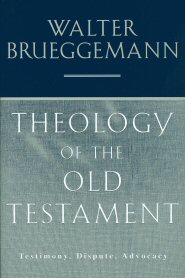
I've been in the thick of Walter Brueggemann's Theology of the Old Testament, but now I'm finally starting to see the light at the end of the tunnel.

In part three he spends several chapters talking about the various aspects of partnership with Yahweh: Israel as partner, the human person as partner, the nations as partner, and creation as partner. I found his consideration of the nations as partner to be really insightful and challenging, particularly the part where he talks about the superpowers of the Old Testament: Egypt, Assyria, Babylon, and Persia. While all four of these superpowers are easily villainized as those who must be defeated, we can't forget that each, in some way, was solicited by Yahweh to partner with Him in the redemption of His creation (see pages 502-518).

- Egypt, through Joseph, becomes a refuge during a great famine (Genesis)

- Asssyria is the "rod" of Yahweh's "anger" (Isaiah, 10:5) against the idolatrous northern kingdom of Israel, as God commissions them to "take spoil and seize plunder" (Isaiah 10:6).

- Babylon, specifically Nebuchandnezzar, whom Yahweh calls "My servant" (Jeremiah 25:9), functions like Assyria except towards the rebellious southern kingdom, Judah.

- Persia, perhaps the least threatening of the four, is the means by which the people of God are able to "return" to Jerusalem, albeit still in service to Persia, in order to rebuild the temple.

In the end, however, these superpowers overreach, as they are wont to do, thus receiving from Yahweh the same judgement as Israel receives. 

So, two things:

1. I find interesting the way Brueggemann is able to situate the chosenness of Israel within this geopolitical scope, namely that the centrality of Israel needs to be sharply qualified. Yahweh won't be monopolized by Israel's concerns as such, regardless of the covenant. Israel is always a small fish in a big pond with a cosmic implications. The cosmic implications of salvation are always in God's purview, regardless of what Israel says and does, and especially if Yahweh must move outside the bonds of covenant for the life of the world. That's a wild and surprising God, right there!

2. I find his argument for the salvation of the superpowers to be really, really compelling. His section on Nebuchadnezzar is great, and at points downright moving in a poetic sense, the way preaching is supposed to be! The story of Nebuchadnezzar is like the story of Jonah in a sense. What if your preaching actually works and people return to God? This is the challenge of "love your enemies" because there may come a point one day where you will fellowship with them at a common table. If you haven't already been practicing forgiveness and reconciliation, what makes you think you will all of a sudden be able to share in the Lord's Supper with them? This is the public challenge of the Amish community shooting back in 2006. It all comes down to hope. Do we hope our enemies will be saved or destroyed?

Wednesday, June 06, 2012

Where Do You Live?

Would this suit you? I can't imagine living like this with kids, but then maybe I don't have a big enough imagination. Still, it's a really interesting idea that certainly challenges contemporary Western cultural assumptions about our use of space as well as what we build homes out of. I wonder how economical it actually is?

Tuesday, June 05, 2012

Reflecting on a Walkabout

Here are three meandering reflections on pilgrimage, or as we like to call it: walkabout.

- A couple days ago, my friend Steve and I set out on another walkabout. This time I took my phone with me to track our progress. Eighteen miles! It took about seven hours, with about an hour for lunch. I was exhausted at the end, sore and sunburned. And we're already talking about what the next one's going to be! The first three hours were relatively easy, as far as it goes. By the time we reached our destination for lunch, we had walked nine miles. We didn't stop to rest at all so I was hungry and tired. Our midway point was a farm out south of Kansas City, owned by a friend of Steve's. About two miles out from the farm we guessed that there would probably be a refrigerator full of ice-cold refreshing beverages. When I sat down with that cold drink in my hand, I started to have a small imagination for what true hospitality and friendship might actually look like. I had reached a point where I was desperately in need of something cold to drink, a point I, and a lot of other North American, hardly ever truly experience. We eat and drink out of habit and indifference, rather than necessity and thankfulness. The walk back was much more difficult. My biggest concern was my hip flexor and my feet. I was doing my best not to change the way I walk, knowing that would cause pain to parts of my leg not used to bearing that much weight while walking. I did pretty good, except the lower parts of the my leg - the muscles next to my shin - really hurt me the next few days. We found a walking stick that proved to be really helpful. One of us would use it for a couple of hills and then we would switch. We stopped a several more times on the way back to rest. At one point we found a shaded spot on a bridge that was just about perfect for a two minute respite before we finished the last leg of our journey. At one point near the end we came upon a blackberry tree. There's nothing better than a sweet taste in your mouth when you've been walking for hours, sipping hot water. What is the kingdom of heaven like? It's like a the taste of rich, sweet blackberries at the end of a long, long walkabout.

- I'm starting to understand the need for pilgrimage as a spiritual discipline, at least for North American Christians for whom the status quo is ease and comfort. I'm reminded of something I read once by David Burrell. He says, "In Beth Sahour we have a YMCA pool; I go there three mornings a week. There's a BMW pulled off the side of the road, and it's one of my swimming partners. I pull to the side, and I say, 'What's that?' 'It's a puncture.' I said, 'Let's fix it.' As a driver of a BMW, my friend had never fixed a tire in his life. And that's the American strength, 'Let's fix it.'" But he points out that such strengths can also be our weakness. It can turn into arrogance such that we need no help from others because we can just do it ourselves. This kind of self-sufficiency, though, can also lead to a kind of slothful laziness as we construct a reality that removes us further and further from the land and the virtue of work. It's gone from we can do it ourselves to we can't do anything for ourselves. I'm not one to talk as I feel tragically removed from the land, but I hope the rest of my life leads me back there.

- In his book, The Sacred Way, Tony Jones quotes Robert Brancatelli on the subject of pilgrimage. "[Brancatelli] sees three steps in the journey. The first is separation, the time of leaving home and that which is comfortable and familiar. The next stage is the liminal period, when the pilgrim is at the edge, the border, the frontier of spirituality - this is when the pilgrim leaves home behind and makes Christ her guide. Finally, reintegration into the community takes place, but the former pilgrim is now, in many ways, an adult with is an individuated faith of his own." I always say you never walk the road alone, but you have to walk it for yourself. I wonder how many of us have barely started the adventure of separation where we truly begin to hold loosely the "stuff" of our lives in order to deeply embrace a better, more divine way.

(The image is one that I took from our walkabout)