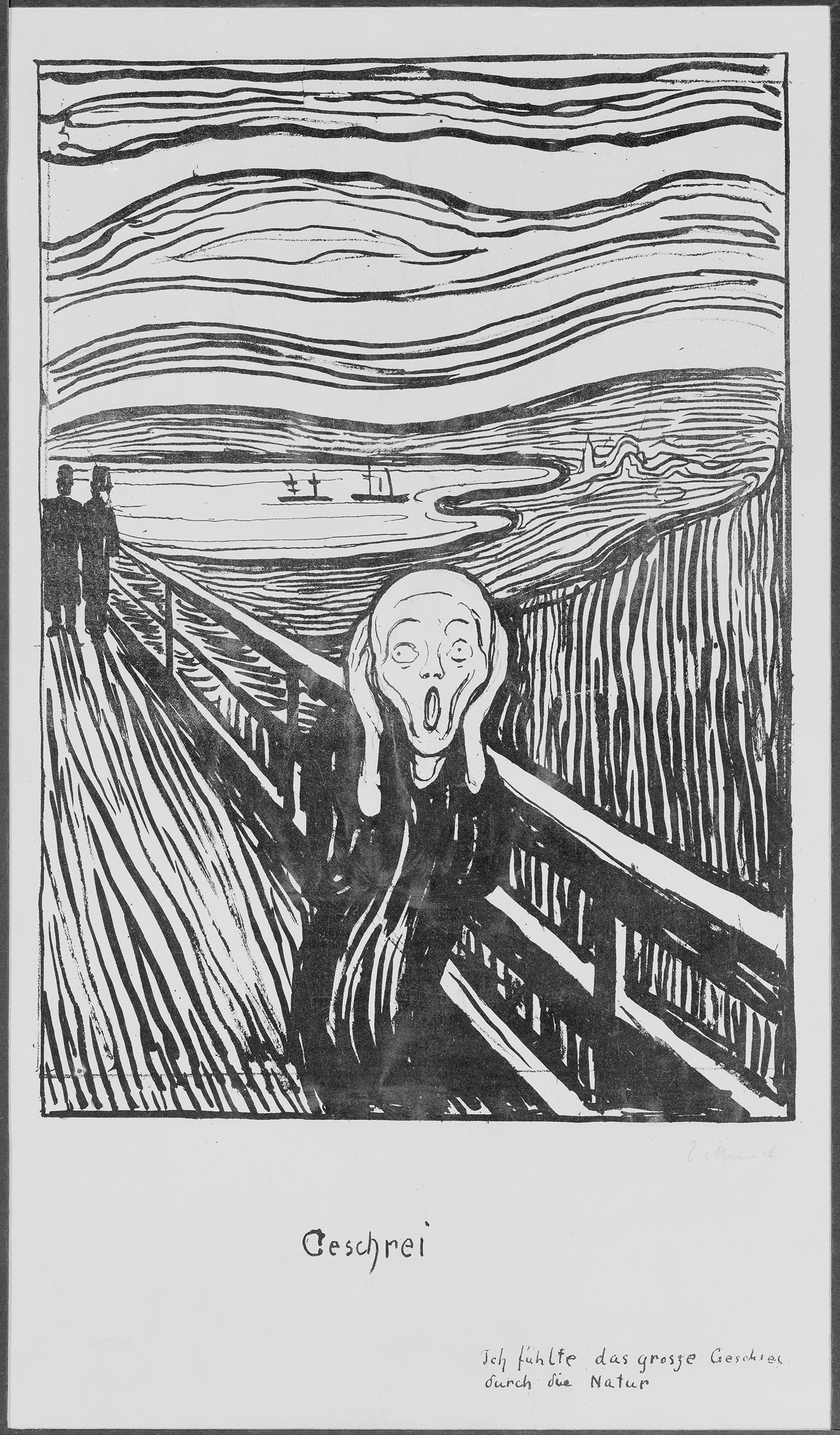
At a certain point during our weekly worship gathering, I get to stand up and lead our church in a modified version of the prayers of the people. We always begin this movement of worship with silence and then confession. The silence lasts somewhere around fifteen seconds, although I always shoot for thirty. As little and insignificant as that may seem, it's intentional; and because it's a part of the liturgy of worship it's deep with meaning.
Chapter three of Dennis Okholm's book, Monk Habits for Everyday People, is called "Learning to Listen." (Read my first post here.)
Silence is not just about not talking. In fact, Benedict never urged for total silence. The restraint of speech was a matter of hospitality. Because they all lived together in a monastic community, silence was encouraged over an excessive amount of talking. Thus, one should speak only when words were necessary. Of course, this begs the question as to how one knows when words are and are not necessary. This is partly why this community practiced intentional times of silence. If you never stop talking then you are not able to know when is the right time to be silent. By practicing silence we learn when to speak and when not to speak. Of course, when they spoke intentionally it was in the form prayer, specifically reading the Psalms. This says a lot about how we learn to speak as Christians. When you begin to follow Jesus, you are just not able to speak maturely about Him. You have to learn how to speak and the Psalms, for example, can train us in this. Consider that Paul spent fourteen years after his conversion learning before he spoke in any sort of public and authoritative way. This should make us pause.
Okholm quotes Michael Casey on this, a point speaks to North American cultures situation of just utter noise. "Talk restricts our capactiy to listen, it banishes mindfulness and opens the door to distraction and escapism. Talking too much often convinces us of the correctness of our own conclusions and leads some into thinking they are wise. IT can be a subtle exercise in arrogance and superiority. Often patters of dependence, manipulation, and dominance are established and maintained by the medium of speech."
In case you're ever wondering, this is why we take time to be silent in worship. Too much is riding on the church's capacity to know when to speak and when to be silent, as well as how to speak and how to be silent.
(Image)
Showing posts with label Silence. Show all posts
Thursday, September 27, 2012
Monday, February 06, 2012
From Others: Abraham Joshua Heschel
I've decided to dedicate the first of the week to silence, which, of course, begs the question: why are you blogging then?
The answer is because I agree with Dietrich Bonhoeffer when he says, "To pray is to be silent and at the same time to cry out, before the God and in the presence of his Word" (Christ the Centre).
I myself will be silent on Monday's, but only in order to make room for to speak. I dedicate Monday for other people's words. I hope you find them to be as fruitful as I have. I hope you find they compel you to pray to the God of whom they refer. I hope you find that same God compelling, if not downright beautiful.
While I may be silent, I welcome you to put your own in the comment box and send them to me.
This weeks collaboration of words are by Abraham Joshua Heschel from his book called The Sabbath.
Also, another good thing to do on Monday is to check out my friend Tim's weekly confessional. You may even want to make one of your own.
The answer is because I agree with Dietrich Bonhoeffer when he says, "To pray is to be silent and at the same time to cry out, before the God and in the presence of his Word" (Christ the Centre).
I myself will be silent on Monday's, but only in order to make room for to speak. I dedicate Monday for other people's words. I hope you find them to be as fruitful as I have. I hope you find they compel you to pray to the God of whom they refer. I hope you find that same God compelling, if not downright beautiful.
While I may be silent, I welcome you to put your own in the comment box and send them to me.
This weeks collaboration of words are by Abraham Joshua Heschel from his book called The Sabbath.
"... even God is conceived by most of us as a thing .... Indeed, we know what to do with space but do not know what to do about time, except to make it subservient to space. Most of us seem to labor for the sake of things of space. As a result we suffer from a deeply rooted dread of time and stand aghast when compelled to look into its face. Time to us is sarcasm, a slick treacherous monster with a jaw like a furnace incinerating every moment of our lives. Shrinking, therefore, from facing time, we escape for shelter to things of space. The intentions we are unable to carry out we deposit in space; possessions become the symbols of our repressions, jubilees of frustrations. But things of space are not fireproof; they only add fuel to the flames. Is the joy of possession an antidote to the terror of time which grows to be a dread of inevitable death? Things, when magnified, are forgeries of happiness, they are a threat of our very lives; we are more harassed than supported by the Frankensteins of spatial things .... The higher goal of spiritual living is not to amass a wealth of information, but to face sacred moments. In a religious experience, for example, it is not a thing that imposes itself on man but a spiritual presence .... We must not forget that it is not a thing that lends a significance to a moment; it is the moment that lends significance to things."
Also, another good thing to do on Monday is to check out my friend Tim's weekly confessional. You may even want to make one of your own.
Subscribe to:
Posts (Atom)