Thursday, April 15, 2010
National Day of Prayer


Jennifer Knapp
Saturday, April 10, 2010
Sleep Talking Man
Here's how you can find this site. (1) Click the link about called "Sleep Talking Man". (2) Go to my sidebar and click the link "Sleep Talking Man." (3) Open up a new web page and type in the words sleeptalkingman.blogspot.com.
Thursday, April 08, 2010
Acedia & Me
In Acedia and Me she tackles a particular subject found all through the Christian tradition. Acedia is a difficult thing to define. The short version definition is lack of care. She says, “the person afflicted with acedia refuses to care or is incapable of doing so.” She likens it to a kind of “spiritual morphine” that not only stifles our desire for God and one another but our desire to take care of our selves (3). Suddenly nothing seems worth it. Making the bed every day is pointless since you will just climb back in at night and ruin what you have done. Worse is the loss of desire to sleep at night and wake up the morning. Modern psychology has often confused laziness and sloth and even depression with Acedia. Part of this has to do with the fact that Acedia as a word/concept went under the radar for so long. Perhaps what doctors and therapists have tried to treat with medication required a more “spiritual” form of direction. Norris always seems to go back to fixed-hour prayer and the Psalms.
Norris is not trying to establish an either/or between Acedia and whatever we have discovered through medicine and psychology. Rather, she wants to recover the idea that part of our depression, laziness, sloth, boredom, etc is not so easily resolved with medication, or even a swift kick in the pants. There is a formational aspect to health and wholeness that Acedia names quite well. Of course, naming is not the name of the game. Naming our conditions helps, but there is also overcoming them, which requires an end to which we must go, a self that is possible. At this point Norris talks about being the image of God.
Acedia, however, is not to be confused with the dark night of the soul, as many call it. What troubled Saint John of the cross, and even Mother Teresa, cannot be labeled acedia. Lacking the felt presence of God is not Acedia, for often time we still long/desire for God and we maintain a sense of what we must do in this life in terms of caring for our others as well as ourselves.
So, that’s the jist of what she is talking about. It’s a good and timely read, I think. Shifting gears a little, I do want to leave with a quote that seems apt to our present digital/virtual age. On the one hand, I couldn’t help but wonder how many us just simply don’t care; I mean really don’t care. On the other hand, in light of the recent political divide in the United States, could it be that many are fighting of the despair of acedia because they hope for something better? Although this quotes ends on a somber note, it’s very revealing. Anyways ...
“When acedia has so thoroughly possessed us, making life seem so dull that only artificial stimulation can get our attention, it may be crazy to suggest that the ordinary rhythms of time, the passing of day and night, have something to teach us, or that there is a world to be revealed when the mall is closed, the electric power has failed, and it is too dark to see anything but shadows and stars. Cast back on our lonely, raw, and wounded selves, we may find the nobody is home.”
Sunday, April 04, 2010
The Rising
Can't see nothin' coming up behind
I make my way through this darkness
I can't feel nothing but this chain that binds me
Lost track of how far I've gone
How far I've gone, how high I've climbed
On my back's a sixty pound stone
On my shoulder a half mile line
Come on up for the rising
Com on up, lay your hands in mine
Come on up for the rising
Come on up for the rising tonight
Left the house this morning
Bells ringing filled the air
Wearin' the cross of my calling
On wheels of fire I come rollin' down here
Come on up for the rising
Come on up, lay your hands in mine
Come on up for the rising
Come on up for the rising tonight
Spirits above and behind me
Faces gone, black eyes burnin' bright
May their precious blood forever bind me
Lord as I stand before your fiery light
I see you Mary in the garden
In the garden of a thousand sighs
There's holy pictures of our children
Dancin' in a sky filled with light
May I feel your arms around me
May I feel your blood mix with mine
A dream of life comes to me
Like a catfish dancin' on the end of the line
Sky of blackness and sorrow (a dream of life)
Sky of love, sky of tears (a dream of life)
Sky of glory and sadness (a dream of life)
Sky of mercy, sky of fear (a dream of life)
Sky of memory and shadow (a dream of life)
Your burnin' wind fills my arms tonight
Sky of longing and emptiness (a dream of life)
Sky of fullness, sky of blessed life (a dream of life)
Come on up for the rising
Come on up, lay your hands in mine
Come on up for the rising
Come on up for the rising tonight
-Bruce Springsteen
Saturday, April 03, 2010
Friday, April 02, 2010
Sunday, March 07, 2010
Fruit
Saturday, January 16, 2010
Richard Hays
His response was perfect. "First of all, the NT is best studied in a community of prayer, worship, and service, where it is taken not merely as a museum piece but as a living word that calls us to account."
Of course, he understood what the question implied and went on to list several top notch university and doctoral programs. Nevertheless, he understands that "the academy" exits to serve the church. For a good conversation on this, read James K. A. Smith's Desiring the Kingdom.
Sunday, January 10, 2010
B.J. Thomas
"Let there be peace on earth
and let it begin with me.
Let there be peace on earth
The peace that was meant to be."
Music
Fake Plastic Trees by Radiohead
Monday, December 28, 2009
on vision ...
A good critique for churches burdened with the quest for an original vision. In the end, what are vision, mission, and purpose statements?
Monday, December 21, 2009
here and there ...
- Scott Daniels quotes C.S. Lewis throwing down on Christmas.
- Stanley Hauerwas writes about Barak Obama's Nobel Peace Prize speech over at the Ekklesia Project blog.
- Time writes about the Advent Conspiracy.
Thursday, December 10, 2009
Obama's Nobel Lecture
I wanted to point out something from Obama’s Nobel Lecture. Obama rightfully acknowledges that the president of the United States cannot follow the examples of Martin Luther King Jr. or Mahatma Gandhi. I want to quote him at length on this one.
“We must begin by acknowledging the hard truth that we will not eradicate violent conflict in our lifetimes. There will be times when nations - acting individually or in concert - will find the use of force not only necessary but morally justified.
I make this statement mindful of what Martin Luther King said in this same ceremony years ago - "Violence never brings permanent peace. It solves no social problem: it merely creates new and more complicated ones." As someone who stands here as a direct consequence of Dr. King's life's work, I am living testimony to the moral force of non-violence. I know there is nothing weak -nothing passive - nothing naïve - in the creed and lives of Gandhi and King.
But as a head of state sworn to protect and defend my nation, I cannot be guided by their examples alone. I face the world as it is, and cannot stand idle in the face of threats to the American people. For make no mistake: evil does exist in the world. A non-violent movement could not have halted Hitler's armies. Negotiations cannot convince al Qaeda's leaders to lay down their arms. To say that force is sometimes necessary is not a call to cynicism - it is a recognition of history; the imperfections of man and the limits of reason.”
Saturday, November 21, 2009
Souls in Transition
The goal of this book is to offer insight into a new developmental stage of life called “emerging adulthood.” He argues that four things contributed to the rise of emerging adulthood.
1. Dramatic growth in higher education.
2. Delay in marriage
3. “Changes in American and global economy that undermine stable, lifelong careers and replace them instead with careers with lower security, more frequent job changes, and an ongoing need for new training and education” (5).
Sorry, I couldn’t really condense that into a neat and tidy phrase.
4. Increased economic support from parents.
Isn’t it interesting to think about how all of these influence one another. Why do parents offer support? Because of the demand for education mean their kids aren't working. Why is there an educational demand? Because long term, stable careers beginning at age eighteen hardly exist anymore. So, why postpone marriage? Because family is unaffordable.
But it also cycles in other ways. Smith says,
“The features marking this stage of an intense identity exploration, instability, a focus on self, feeling in limbo or in transition or in between, and a sense of possibilities, opportunity, and unparalleled hope. These are, of course, accompanied … by large doses of transience, confusion, anxiety, self-obsession, melodrama, conflict, disappointment, and sometimes emotional devastation” (6).
This isn’t just a vicious cycle tyrannizing 18-23 year olds. They are seeking out this new life stage. At this point Smith reminds us of something important.
“Life stages are not naturally given as immutable phases of existence … they are cultural constructions that interact with biology and material production, and are profoundly shaped by the social and institutional conditions that generate and sustain them” (6).
For example, “tweens” as a life stage didn’t really exist when I was a kid. At least not the way it does today. I don’t remember having any heroes to whom I could look up to between childhood and being a teenager. No one market clothes or music specifically to me between the ages of 7 to 13. I do remember watching Boy Meets World as a highschooler, wondering why I was strangely fascinated. Perhaps I was feeling the early rumblings of emerging adulthood in the form of me trying to make sense of my childhood.
I also remember watching Dawson’s Creek and wondering why I didn’t speak with such eloquence. I just know I wanted to. Now, I think it’s interesting that I loved watching Scrubs, a show in which the whole story is about a young doctor coming to terms with growing up, taking responsibility, getting over his abandonment issues, learning how to do things on his own, but still being cool and edgy and well versed in old TV sitcoms (because quoting shows/movies is characteristic of emerging adults).
In any case, I am beginning to think that perhaps Arrested Development’s death was a bit premature. But then that's the question, is emerging adulthood an arrested development?
Bring back the Bluths!
Thursday, November 05, 2009
Do Churches die well?
Has anyone actually experienced or heard of a church that saw the writing on the wall and died their natural death?
I've heard quips through the years about how none of the Church gatherings talked about in the New Testament exist today. And of course, we know that every Church gathering is not guaranteed lasting existence.
The only stories I have ever heard of are ones about new Churches gatherings and how they are going to change the world.
I want to hear about the opposite end of the spectrum.
For some reason I think it matters.
Perhaps needless to say, Bickers words seem crass.
Saturday, October 31, 2009
Lycanthropy
Friday, October 23, 2009
What does this even mean?
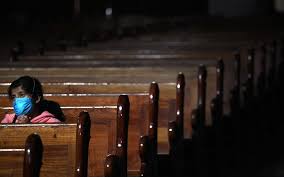
I received an email today with some helpful suggestions on how churches can take precaution in light of the H1N1 flu, which is apparently now an official pandemic. Many of the suggestions were kind of helpful, but I am not sure about the last suggestion. Here it is...
"Limit church services and other gatherings only if advised by public health officials, but then cooperate as fully as possible as responsible citizens."
What does this even mean?
Flu pandemics do indeed raise interesting questions for churches to ask. Should we have purell stations for people to pass through as they go to table? Should we empty and refill the baptismal for every person?
I'm kinda of poking fun at this. But also not. I wonder how churches lived life together in the 1980s when HIV/AIDS hid the scene?
Mostly I lament that these are things we have to even think about.
Saturday, October 10, 2009
"If I had been righteous myself, perhaps there would have been no criminal standing before me."
“Remember particularly that you cannot be a judge of any one. For no one can judge a criminal until he recognizes that he is just such a criminal as the man standing before him, and that he perhaps is more than all men to blame for that crime. When he understands that, he will be able to be a judge. Though that sounds absurd, it is true. If I had been righteous myself, perhaps there would have been no criminal standing before me. If you can take upon yourself the crime of the criminal your heart is judging, take it at once, suffer for him yourself, and let him go without reproach. And even if the law itself makes you his judge, act in the same spirit so far as possible, for he will go away and condemn himself more bitterly than you have done. If, after your kiss, he goes away untouched, mocking at you, do not let that be a stumbling-block to you. It shows his time has not yet come, but it will come in due course. And if it come not, no matter; if not he, then another in his place will understand an suffer, and judge and condemn himself, and the truth will be fulfilled. Believe that, believe it without doubt; for in that lies all the hope and faith of the saints.” (Fyodor Dostoyevsky, The Brothers Karamasov, 295ff).