I thought I might jot down a few of my favorite things to do in KC ... a work in progress (and in no particular order). I should clarify, though, that I am no expert of all things KC. I have only lived here for about five years so my knowledge of the town is relative to that. And I don't make it a priority to "experience" everything. So, there's my disclaimer.
McCoy's Public House and Brew. McCoy's is iconic for me. It was one of the first places I latched on to when we moved to KC in 2005. I enjoy everything about this place.
Blackdog Coffeehouse. I'm actually in Blackdog as I write this. I don't really know what it is about this place but I love it. The coffee is good and inexpensive. There is almost always space to sit. Free internet. There's a good variety of people filtering in and out.
Kansas City Mafia History. Okay this is a little bit of a different "favorite thing." Anybody can read about this, but I mention it here because it was here where I was first exposed and drawn into it. I remember being at work and opening the newspaper on the anniversary of the Union Station Massacre. I was in!
Loose Park. I've walked, read, played ultimate Frisbee, and even almost witnessed a mugging all at this park (we got to lady only seconds after her muggers escaped). But don't let the mugging fool you, it's a great place. It's a big park that let's you forget for a while that you're in the city. There's a play ground, a rose garden, a pond (with ducks) and even some nature tours. And there's enough space to lay a blanket on the ground far enough away from people where you can find some solitude.
Nelson-Atkins Museum of Art. I can't say that I go here a lot nor that I have an extensive knowledge of art. Most of the time I am simply happy that this is here in KC for me to visit whenever I want. I find freedom in knowing that I could escape for a while to a place like this even if I don't do it a lot. However, I have visited it a number of times and love the environment and what it does to me.
Rainy Day Books. I mostly like this book store because they do these author events where we have been able to hear people like Anne Lamott and Frank McCourt. I really enjoy these.
Half Price Books. When it comes to book stores I always begin here. They always have something I want, not that I necessarily buy it. And they have pretty good deals to.
Kansas Skies. One of the things we noticed about life in Kansas is that the skies are beautiful! I can't say they compare to some of the sights I grew up with living in California (ocean sunsets still take the cake). But Kansas skies are right up there. There is something about the way the clouds move and take shape. And the colors! The way the green lights up as the sun reflects on the clouds and illuminates everything. It's awesome!
Sunday, May 02, 2010


Saturday, May 01, 2010
Romans Resources
Okay ... I'm in the middle of read through Romans with my community group and I am wondering about resources. I'm looking for anything and everything--Books, articles, audio lectures and sermons, etc. I'm particularly interested in the audio stuff. Is there anything out there?
Thursday, April 29, 2010
Marilynne Robinson
Since Marilynne Robinson is coming to KC here real soon, I thought I would post the very creative and moving opening paragraph of Gilead.
"I told you last night that I might be gone sometime, and you said, Where, and I said, To be with the Good Lord, and you said, Why, and I said, Because I'm old, and you said, I don't think you're old. And you put your hand in my hand and you said, You aren't very old, as if that settled it. I told you you might have a very different life from mine, and form the life you've had with me, and that would be a wonderful thing, there are many ways to live a good life. And you said, Mama already told me that. And then you said, Don't laugh! because you thought I was laughing at you. You reached up and put your fingers on my lips and gave me that look I never in my life saw on any other face besides your mother's. It's a kind of furious pride, very passionate and stern. I'm always a little surprised to find my eyebrows unsinged after I've suffered one of those looks. I will miss them."
"I told you last night that I might be gone sometime, and you said, Where, and I said, To be with the Good Lord, and you said, Why, and I said, Because I'm old, and you said, I don't think you're old. And you put your hand in my hand and you said, You aren't very old, as if that settled it. I told you you might have a very different life from mine, and form the life you've had with me, and that would be a wonderful thing, there are many ways to live a good life. And you said, Mama already told me that. And then you said, Don't laugh! because you thought I was laughing at you. You reached up and put your fingers on my lips and gave me that look I never in my life saw on any other face besides your mother's. It's a kind of furious pride, very passionate and stern. I'm always a little surprised to find my eyebrows unsinged after I've suffered one of those looks. I will miss them."
Wednesday, April 28, 2010
Parker Palmer
"In the tradition of pilgrimage, those hardships are seen not as accidental but as integral to the journey itself. Treacherous terrain, bad weather, taking a fall, getting lost -- challenges of that sort, largely beyond our control can strip the ego of the illusion that it is in charge and make space for true self to emerge. If that happens, the pilgrim has a better change to find the scared center he or she seeks. Disabused of our illusions by much travel and travail, we awaken one day to find that the sacred center is here and now -- in every moment of the journey, everywhere in the world around us, and deep within our own hearts."
Parker Palmer, Let Your Life Speak, 18.
Parker Palmer, Let Your Life Speak, 18.
Friday, April 23, 2010
For Sunday: Luke 10:38-42
Any thoughts on this?
"Now as they were traveling along, He entered a village; and a woman name Martha welcomed Him into her home. She had a sister called Mary, who was seated at the Lord's feet listening to His word. But Martha was distracted with all her preparation; and she came up to Him and said, "Lord do You not care that my sister has left me to do all the serving alone? Then tell her to help me." But the Lord answered and said to her, "Martha, Martha, you are worried and bothered about so many things; but only one thing is necessary, for Mary has chosen the good part, which shall not be taken away from her."
"Now as they were traveling along, He entered a village; and a woman name Martha welcomed Him into her home. She had a sister called Mary, who was seated at the Lord's feet listening to His word. But Martha was distracted with all her preparation; and she came up to Him and said, "Lord do You not care that my sister has left me to do all the serving alone? Then tell her to help me." But the Lord answered and said to her, "Martha, Martha, you are worried and bothered about so many things; but only one thing is necessary, for Mary has chosen the good part, which shall not be taken away from her."
Thursday, April 22, 2010
Rohr on Wisdom
"Without exception, all of the wisdom traditions would insist that this wisdom is given and not taken, waited for and not demanded, having much more to do with long-term willingness than mere willfulness."
Richard Rohr, The Naked Now: Learning to See as the Mystics See (page 63).
Richard Rohr, The Naked Now: Learning to See as the Mystics See (page 63).
Wednesday, April 21, 2010
Mumford and Sons
I discovered Mumford and Sons through Jamie Smith's blog ... So, thanks to him for posting about them! I am really digging this band right now and I wanted to share just two of their songs for now.
The first one is called "Sigh No More." Here are the lyrics ...
Serve God love me and men
This is not the end
Live unbruised we are friends
And I'm sorry
I'm sorry
Sigh no more, no more
One foot in sea, one on shore
My heart was never pure
you know me
you know me
And man is a giddy thing
Oh man is a giddy thing
Oh man is a giddy thing
Oh man is a giddy thing
Love that will not betray you,
dismay or enslave you,
It will set you free
Be more like the man
you were made to be.
There is a design,
An alignment to cry,
At my heart you see,
The beauty of love
as it was made to be
It starts out slow and builds towards this lyrically beautiful climax, not that I don't also love the way it sounds! There's not a really good video out there that I could find, but I think you'll get the point. Enjoy!
The other song is called "Little Lion Man." For some reason when I hear this song I think about my own son. Here are the lyrics ...
Weep for yourself, my man,
you'll never be what is in your heart
weep little lion man,
you're not as brave as you were at the start
rate yourself and rake yourself,
take all the courage you have left
wasted on fixing all the problems
that you made in your own head
but it was not your fault but mine
and it was your heart on the line
I really fucked it up this time
didn't I, my dear?
didn't I, my...
tremble for yourself, my man,
you know that you have seen this all before
tremble little lion man,
you'll never settle for any of your scores
your grace is wasted in your face,
your boldness stands alone among the wreck
learn from your mother or else spend your days biting your own neck
Here's the official video. Note ... if you read the lyrics you know that there's one word in there you might not want your kids to hear so make sure they aren't in the room when you listen.
The first one is called "Sigh No More." Here are the lyrics ...
Serve God love me and men
This is not the end
Live unbruised we are friends
And I'm sorry
I'm sorry
Sigh no more, no more
One foot in sea, one on shore
My heart was never pure
you know me
you know me
And man is a giddy thing
Oh man is a giddy thing
Oh man is a giddy thing
Oh man is a giddy thing
Love that will not betray you,
dismay or enslave you,
It will set you free
Be more like the man
you were made to be.
There is a design,
An alignment to cry,
At my heart you see,
The beauty of love
as it was made to be
It starts out slow and builds towards this lyrically beautiful climax, not that I don't also love the way it sounds! There's not a really good video out there that I could find, but I think you'll get the point. Enjoy!
The other song is called "Little Lion Man." For some reason when I hear this song I think about my own son. Here are the lyrics ...
Weep for yourself, my man,
you'll never be what is in your heart
weep little lion man,
you're not as brave as you were at the start
rate yourself and rake yourself,
take all the courage you have left
wasted on fixing all the problems
that you made in your own head
but it was not your fault but mine
and it was your heart on the line
I really fucked it up this time
didn't I, my dear?
didn't I, my...
tremble for yourself, my man,
you know that you have seen this all before
tremble little lion man,
you'll never settle for any of your scores
your grace is wasted in your face,
your boldness stands alone among the wreck
learn from your mother or else spend your days biting your own neck
Here's the official video. Note ... if you read the lyrics you know that there's one word in there you might not want your kids to hear so make sure they aren't in the room when you listen.
Kathleen Norris, Metaphor, and the Book of Revelation
I recently read this in Kathleen Norris's book The Cloister Walk and absolutely loved it. The quote comes at the end of a chapter where she has been reflecting on the time when St. John's (the Abbey at which she is an oblate) read John's Apocalypse straight through one morning. She found that reading it lectio style made the vision and the metaphors come alive. Insightfully she notes that "the images of apocalypse are meant to make us uncomfortable" (213), that it takes us "beyond the bounds of language and custom" (214). But it's what she says at the end the grabs my gut, heart, and head.
"Dragons within, dragons without. Evil so pervasive that only the poetry of apocalypse can imagine its defeat. And to do that it takes us to the limits of metaphor, of human sense, the limits of imagining and understanding. It pushes us against all our boundaries and suggest that the end of our control--our ideologies our plans, our competence, our expertise, our professionalism, our power--is the beginning of God's reign. It asks us to believe that only the good remains, at the end, and directs us toward carefully tending it here and now. We will sing a new song. Singing and praise will be all that remains. As a poet, that's a vision, and I promise, I can live with."
Tuesday, April 20, 2010
N.T. Wright and friends at Wheaton
When I first heard that a whole slew of theological brainiacs where going to be a part of a conference at Wheaton in April I soooo wanted to go. Alas, the Lord works in mysterious ways and prevented me from attending a conference and instead granted me a gift in visiting family in California as we mourned and celebrated the death of a grandma. Nevertheless, you could imagine how happy I was when I discovered that I could listen to many of the lectures online! Thanks to those who made it possible for us to glean from the conference through these audio recordings!
Thursday, April 15, 2010
National Day of Prayer
Is it really that big of deal that the White House canceled the ecumenical ceremony usually held at the White House? It seems that most people think the entire day has been canceled, but it hasn't. Only the ecumenical ceremony has. Why does this bother people?
Jennifer Knapp
It's hard for me to tell who knows about Jennifer Knapp or not. If her "coming out" is flying more or less under the radar, it is only a matter of time. However, given her interview with Christianity Today, I am certain that word is out. I wonder how people will react to her? How did you react to this? Did it shock you? Or are you not surprised that more and more Christians are coming out about their sexuality (Ted Haggard and Ray Boltz)?
Saturday, April 10, 2010
Sleep Talking Man
Have you ever heard of the blog called Sleep Talking Man? No? Well, here's what it is ... it's a blog about a man who ... get this .. .talks in his sleep! No kidding. It's pretty funny, go check it out. I will say, though, that he can be rather "colorful," as they say. So, if that offends you don't say I didn't warn you.
Here's how you can find this site. (1) Click the link about called "Sleep Talking Man". (2) Go to my sidebar and click the link "Sleep Talking Man." (3) Open up a new web page and type in the words sleeptalkingman.blogspot.com.
Here's how you can find this site. (1) Click the link about called "Sleep Talking Man". (2) Go to my sidebar and click the link "Sleep Talking Man." (3) Open up a new web page and type in the words sleeptalkingman.blogspot.com.
Thursday, April 08, 2010
Acedia & Me
A couple of weeks ago I started reading Kathleen Norris’s new book Acedia and Me. My introduction to Norris was in college where I had to read The Cloister Walk for class. I have to admit that I wasn’t that in to reading her stuff back then. Although I am certain that my disinterest had less to do with her than with me. CW is a spiritual autobiography of sorts tracking, as she calls it, her “immersion into the liturgical world.” She makes her way through the early church fathers such as Gregory of Nazianzus, Basil the Great, and Gregory the Great. She talks about the “mystics” such as Hildegard of Bingen. She also spends time working through the Rule of Saint Benedict. CW is a wonderful account of a Protestant becoming familiar with her own ancient tradition.
In Acedia and Me she tackles a particular subject found all through the Christian tradition. Acedia is a difficult thing to define. The short version definition is lack of care. She says, “the person afflicted with acedia refuses to care or is incapable of doing so.” She likens it to a kind of “spiritual morphine” that not only stifles our desire for God and one another but our desire to take care of our selves (3). Suddenly nothing seems worth it. Making the bed every day is pointless since you will just climb back in at night and ruin what you have done. Worse is the loss of desire to sleep at night and wake up the morning. Modern psychology has often confused laziness and sloth and even depression with Acedia. Part of this has to do with the fact that Acedia as a word/concept went under the radar for so long. Perhaps what doctors and therapists have tried to treat with medication required a more “spiritual” form of direction. Norris always seems to go back to fixed-hour prayer and the Psalms.
Norris is not trying to establish an either/or between Acedia and whatever we have discovered through medicine and psychology. Rather, she wants to recover the idea that part of our depression, laziness, sloth, boredom, etc is not so easily resolved with medication, or even a swift kick in the pants. There is a formational aspect to health and wholeness that Acedia names quite well. Of course, naming is not the name of the game. Naming our conditions helps, but there is also overcoming them, which requires an end to which we must go, a self that is possible. At this point Norris talks about being the image of God.
Acedia, however, is not to be confused with the dark night of the soul, as many call it. What troubled Saint John of the cross, and even Mother Teresa, cannot be labeled acedia. Lacking the felt presence of God is not Acedia, for often time we still long/desire for God and we maintain a sense of what we must do in this life in terms of caring for our others as well as ourselves.
So, that’s the jist of what she is talking about. It’s a good and timely read, I think. Shifting gears a little, I do want to leave with a quote that seems apt to our present digital/virtual age. On the one hand, I couldn’t help but wonder how many us just simply don’t care; I mean really don’t care. On the other hand, in light of the recent political divide in the United States, could it be that many are fighting of the despair of acedia because they hope for something better? Although this quotes ends on a somber note, it’s very revealing. Anyways ...
“When acedia has so thoroughly possessed us, making life seem so dull that only artificial stimulation can get our attention, it may be crazy to suggest that the ordinary rhythms of time, the passing of day and night, have something to teach us, or that there is a world to be revealed when the mall is closed, the electric power has failed, and it is too dark to see anything but shadows and stars. Cast back on our lonely, raw, and wounded selves, we may find the nobody is home.”
In Acedia and Me she tackles a particular subject found all through the Christian tradition. Acedia is a difficult thing to define. The short version definition is lack of care. She says, “the person afflicted with acedia refuses to care or is incapable of doing so.” She likens it to a kind of “spiritual morphine” that not only stifles our desire for God and one another but our desire to take care of our selves (3). Suddenly nothing seems worth it. Making the bed every day is pointless since you will just climb back in at night and ruin what you have done. Worse is the loss of desire to sleep at night and wake up the morning. Modern psychology has often confused laziness and sloth and even depression with Acedia. Part of this has to do with the fact that Acedia as a word/concept went under the radar for so long. Perhaps what doctors and therapists have tried to treat with medication required a more “spiritual” form of direction. Norris always seems to go back to fixed-hour prayer and the Psalms.
Norris is not trying to establish an either/or between Acedia and whatever we have discovered through medicine and psychology. Rather, she wants to recover the idea that part of our depression, laziness, sloth, boredom, etc is not so easily resolved with medication, or even a swift kick in the pants. There is a formational aspect to health and wholeness that Acedia names quite well. Of course, naming is not the name of the game. Naming our conditions helps, but there is also overcoming them, which requires an end to which we must go, a self that is possible. At this point Norris talks about being the image of God.
Acedia, however, is not to be confused with the dark night of the soul, as many call it. What troubled Saint John of the cross, and even Mother Teresa, cannot be labeled acedia. Lacking the felt presence of God is not Acedia, for often time we still long/desire for God and we maintain a sense of what we must do in this life in terms of caring for our others as well as ourselves.
So, that’s the jist of what she is talking about. It’s a good and timely read, I think. Shifting gears a little, I do want to leave with a quote that seems apt to our present digital/virtual age. On the one hand, I couldn’t help but wonder how many us just simply don’t care; I mean really don’t care. On the other hand, in light of the recent political divide in the United States, could it be that many are fighting of the despair of acedia because they hope for something better? Although this quotes ends on a somber note, it’s very revealing. Anyways ...
“When acedia has so thoroughly possessed us, making life seem so dull that only artificial stimulation can get our attention, it may be crazy to suggest that the ordinary rhythms of time, the passing of day and night, have something to teach us, or that there is a world to be revealed when the mall is closed, the electric power has failed, and it is too dark to see anything but shadows and stars. Cast back on our lonely, raw, and wounded selves, we may find the nobody is home.”
Sunday, April 04, 2010
The Rising
Can't see nothin' in front of me
Can't see nothin' coming up behind
I make my way through this darkness
I can't feel nothing but this chain that binds me
Lost track of how far I've gone
How far I've gone, how high I've climbed
On my back's a sixty pound stone
On my shoulder a half mile line
Come on up for the rising
Com on up, lay your hands in mine
Come on up for the rising
Come on up for the rising tonight
Left the house this morning
Bells ringing filled the air
Wearin' the cross of my calling
On wheels of fire I come rollin' down here
Come on up for the rising
Come on up, lay your hands in mine
Come on up for the rising
Come on up for the rising tonight
Spirits above and behind me
Faces gone, black eyes burnin' bright
May their precious blood forever bind me
Lord as I stand before your fiery light
I see you Mary in the garden
In the garden of a thousand sighs
There's holy pictures of our children
Dancin' in a sky filled with light
May I feel your arms around me
May I feel your blood mix with mine
A dream of life comes to me
Like a catfish dancin' on the end of the line
Sky of blackness and sorrow (a dream of life)
Sky of love, sky of tears (a dream of life)
Sky of glory and sadness (a dream of life)
Sky of mercy, sky of fear (a dream of life)
Sky of memory and shadow (a dream of life)
Your burnin' wind fills my arms tonight
Sky of longing and emptiness (a dream of life)
Sky of fullness, sky of blessed life (a dream of life)
Come on up for the rising
Come on up, lay your hands in mine
Come on up for the rising
Come on up for the rising tonight
-Bruce Springsteen
Can't see nothin' coming up behind
I make my way through this darkness
I can't feel nothing but this chain that binds me
Lost track of how far I've gone
How far I've gone, how high I've climbed
On my back's a sixty pound stone
On my shoulder a half mile line
Come on up for the rising
Com on up, lay your hands in mine
Come on up for the rising
Come on up for the rising tonight
Left the house this morning
Bells ringing filled the air
Wearin' the cross of my calling
On wheels of fire I come rollin' down here
Come on up for the rising
Come on up, lay your hands in mine
Come on up for the rising
Come on up for the rising tonight
Spirits above and behind me
Faces gone, black eyes burnin' bright
May their precious blood forever bind me
Lord as I stand before your fiery light
I see you Mary in the garden
In the garden of a thousand sighs
There's holy pictures of our children
Dancin' in a sky filled with light
May I feel your arms around me
May I feel your blood mix with mine
A dream of life comes to me
Like a catfish dancin' on the end of the line
Sky of blackness and sorrow (a dream of life)
Sky of love, sky of tears (a dream of life)
Sky of glory and sadness (a dream of life)
Sky of mercy, sky of fear (a dream of life)
Sky of memory and shadow (a dream of life)
Your burnin' wind fills my arms tonight
Sky of longing and emptiness (a dream of life)
Sky of fullness, sky of blessed life (a dream of life)
Come on up for the rising
Come on up, lay your hands in mine
Come on up for the rising
Come on up for the rising tonight
-Bruce Springsteen
Saturday, April 03, 2010
Friday, April 02, 2010
Sunday, March 07, 2010
Fruit
A man had a fig tree which had been planted in his vineyard; and he came looking for fruit on it and did not find any. And he said to the vineyard-keeper, "Behold, for three years I have come looking for fruit on this fig tree without finding any. Cut it down! Why does it even use up the ground?" And he answered and said to him, "Let it alone, sir, for this year too, until I dig around it and put in fertilizer; and if it bears fruit next year, fine; but if not cut it down."
Saturday, January 16, 2010
Richard Hays
I recently came across an interview of Richard Hays where he was asked this question: "What are some of the best places in your view to study the New Testament today?"
His response was perfect. "First of all, the NT is best studied in a community of prayer, worship, and service, where it is taken not merely as a museum piece but as a living word that calls us to account."
Of course, he understood what the question implied and went on to list several top notch university and doctoral programs. Nevertheless, he understands that "the academy" exits to serve the church. For a good conversation on this, read James K. A. Smith's Desiring the Kingdom.
His response was perfect. "First of all, the NT is best studied in a community of prayer, worship, and service, where it is taken not merely as a museum piece but as a living word that calls us to account."
Of course, he understood what the question implied and went on to list several top notch university and doctoral programs. Nevertheless, he understands that "the academy" exits to serve the church. For a good conversation on this, read James K. A. Smith's Desiring the Kingdom.
Sunday, January 10, 2010
B.J. Thomas
He get's it right ...
"Let there be peace on earth
and let it begin with me.
Let there be peace on earth
The peace that was meant to be."
"Let there be peace on earth
and let it begin with me.
Let there be peace on earth
The peace that was meant to be."
Music
Here are three songs that have been stuck in my head for awhile now ...
Fake Plastic Trees by Radiohead
Fake Plastic Trees by Radiohead
Monday, December 28, 2009
on vision ...
"Vision, then, originates not in seeing but in hearing a voice, the living voice of the good news sounding forth within, and from, the assembly. Theologically, vision talk can be ventured only in the context of the church at prayer. Vision is a product of collective listening for the viva vox evangelii. That is why worship in word and sacrament isn't just one ministry among others (the work of the "worship team"); rather it's the ministry of ministries. It fuels learning, witness (evangelism), servant life, and support (stewardship). Vision isn't something we have; it's a reality that has us. It's cross-shaped. Pragmatically, it has us by our constantly asking questions, by our establishing a climate of dialogue, an environment of call and response." (John Berntsen, Cross-Shaped Leadership: On the Rough and Tumble of Parish Practice, 69).
A good critique for churches burdened with the quest for an original vision. In the end, what are vision, mission, and purpose statements?
A good critique for churches burdened with the quest for an original vision. In the end, what are vision, mission, and purpose statements?
Monday, December 21, 2009
here and there ...
- Scott Daniels quotes C.S. Lewis throwing down on Christmas.
- Stanley Hauerwas writes about Barak Obama's Nobel Peace Prize speech over at the Ekklesia Project blog.
- Time writes about the Advent Conspiracy.
Thursday, December 10, 2009
Obama's Nobel Lecture
I wanted to point out something from Obama’s Nobel Lecture. Obama rightfully acknowledges that the president of the United States cannot follow the examples of Martin Luther King Jr. or Mahatma Gandhi. I want to quote him at length on this one.
“We must begin by acknowledging the hard truth that we will not eradicate violent conflict in our lifetimes. There will be times when nations - acting individually or in concert - will find the use of force not only necessary but morally justified.
I make this statement mindful of what Martin Luther King said in this same ceremony years ago - "Violence never brings permanent peace. It solves no social problem: it merely creates new and more complicated ones." As someone who stands here as a direct consequence of Dr. King's life's work, I am living testimony to the moral force of non-violence. I know there is nothing weak -nothing passive - nothing naïve - in the creed and lives of Gandhi and King.
But as a head of state sworn to protect and defend my nation, I cannot be guided by their examples alone. I face the world as it is, and cannot stand idle in the face of threats to the American people. For make no mistake: evil does exist in the world. A non-violent movement could not have halted Hitler's armies. Negotiations cannot convince al Qaeda's leaders to lay down their arms. To say that force is sometimes necessary is not a call to cynicism - it is a recognition of history; the imperfections of man and the limits of reason.”
Saturday, November 21, 2009
Souls in Transition
Christian Smith’s new book Souls in Transition: The Religious and Spiritual Lives of Emerging Adults looks really interesting.
The goal of this book is to offer insight into a new developmental stage of life called “emerging adulthood.” He argues that four things contributed to the rise of emerging adulthood.
1. Dramatic growth in higher education.
2. Delay in marriage
3. “Changes in American and global economy that undermine stable, lifelong careers and replace them instead with careers with lower security, more frequent job changes, and an ongoing need for new training and education” (5).
Sorry, I couldn’t really condense that into a neat and tidy phrase.
4. Increased economic support from parents.
Isn’t it interesting to think about how all of these influence one another. Why do parents offer support? Because of the demand for education mean their kids aren't working. Why is there an educational demand? Because long term, stable careers beginning at age eighteen hardly exist anymore. So, why postpone marriage? Because family is unaffordable.
But it also cycles in other ways. Smith says,
This isn’t just a vicious cycle tyrannizing 18-23 year olds. They are seeking out this new life stage. At this point Smith reminds us of something important.
For example, “tweens” as a life stage didn’t really exist when I was a kid. At least not the way it does today. I don’t remember having any heroes to whom I could look up to between childhood and being a teenager. No one market clothes or music specifically to me between the ages of 7 to 13. I do remember watching Boy Meets World as a highschooler, wondering why I was strangely fascinated. Perhaps I was feeling the early rumblings of emerging adulthood in the form of me trying to make sense of my childhood.
I also remember watching Dawson’s Creek and wondering why I didn’t speak with such eloquence. I just know I wanted to. Now, I think it’s interesting that I loved watching Scrubs, a show in which the whole story is about a young doctor coming to terms with growing up, taking responsibility, getting over his abandonment issues, learning how to do things on his own, but still being cool and edgy and well versed in old TV sitcoms (because quoting shows/movies is characteristic of emerging adults).
In any case, I am beginning to think that perhaps Arrested Development’s death was a bit premature. But then that's the question, is emerging adulthood an arrested development?
Bring back the Bluths!
The goal of this book is to offer insight into a new developmental stage of life called “emerging adulthood.” He argues that four things contributed to the rise of emerging adulthood.
1. Dramatic growth in higher education.
2. Delay in marriage
3. “Changes in American and global economy that undermine stable, lifelong careers and replace them instead with careers with lower security, more frequent job changes, and an ongoing need for new training and education” (5).
Sorry, I couldn’t really condense that into a neat and tidy phrase.
4. Increased economic support from parents.
Isn’t it interesting to think about how all of these influence one another. Why do parents offer support? Because of the demand for education mean their kids aren't working. Why is there an educational demand? Because long term, stable careers beginning at age eighteen hardly exist anymore. So, why postpone marriage? Because family is unaffordable.
But it also cycles in other ways. Smith says,
“The features marking this stage of an intense identity exploration, instability, a focus on self, feeling in limbo or in transition or in between, and a sense of possibilities, opportunity, and unparalleled hope. These are, of course, accompanied … by large doses of transience, confusion, anxiety, self-obsession, melodrama, conflict, disappointment, and sometimes emotional devastation” (6).
This isn’t just a vicious cycle tyrannizing 18-23 year olds. They are seeking out this new life stage. At this point Smith reminds us of something important.
“Life stages are not naturally given as immutable phases of existence … they are cultural constructions that interact with biology and material production, and are profoundly shaped by the social and institutional conditions that generate and sustain them” (6).
For example, “tweens” as a life stage didn’t really exist when I was a kid. At least not the way it does today. I don’t remember having any heroes to whom I could look up to between childhood and being a teenager. No one market clothes or music specifically to me between the ages of 7 to 13. I do remember watching Boy Meets World as a highschooler, wondering why I was strangely fascinated. Perhaps I was feeling the early rumblings of emerging adulthood in the form of me trying to make sense of my childhood.
I also remember watching Dawson’s Creek and wondering why I didn’t speak with such eloquence. I just know I wanted to. Now, I think it’s interesting that I loved watching Scrubs, a show in which the whole story is about a young doctor coming to terms with growing up, taking responsibility, getting over his abandonment issues, learning how to do things on his own, but still being cool and edgy and well versed in old TV sitcoms (because quoting shows/movies is characteristic of emerging adults).
In any case, I am beginning to think that perhaps Arrested Development’s death was a bit premature. But then that's the question, is emerging adulthood an arrested development?
Bring back the Bluths!
Thursday, November 05, 2009
Do Churches die well?
Dennis Bickers says, "Throughout the book we will see various reasons why smaller churches resist change, but we might as well admit now that transformation will not occur in some churches that are near the end of their ministries. Perhaps the kindest thing that could be done for these churches is to honor their former ministries and allow them to die their natural deaths."
Has anyone actually experienced or heard of a church that saw the writing on the wall and died their natural death?
I've heard quips through the years about how none of the Church gatherings talked about in the New Testament exist today. And of course, we know that every Church gathering is not guaranteed lasting existence.
The only stories I have ever heard of are ones about new Churches gatherings and how they are going to change the world.
I want to hear about the opposite end of the spectrum.
For some reason I think it matters.
Perhaps needless to say, Bickers words seem crass.
Has anyone actually experienced or heard of a church that saw the writing on the wall and died their natural death?
I've heard quips through the years about how none of the Church gatherings talked about in the New Testament exist today. And of course, we know that every Church gathering is not guaranteed lasting existence.
The only stories I have ever heard of are ones about new Churches gatherings and how they are going to change the world.
I want to hear about the opposite end of the spectrum.
For some reason I think it matters.
Perhaps needless to say, Bickers words seem crass.
Saturday, October 31, 2009
Lycanthropy
This mornings word-of-the-day that I get through my email is lycanthropy. It means, "a delusion that one has become a wolf." Do many people suffer from this?
Friday, October 23, 2009
What does this even mean?
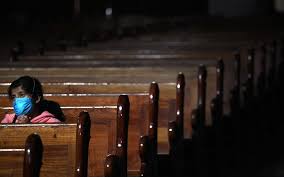
I received an email today with some helpful suggestions on how churches can take precaution in light of the H1N1 flu, which is apparently now an official pandemic. Many of the suggestions were kind of helpful, but I am not sure about the last suggestion. Here it is...
"Limit church services and other gatherings only if advised by public health officials, but then cooperate as fully as possible as responsible citizens."
What does this even mean?
Flu pandemics do indeed raise interesting questions for churches to ask. Should we have purell stations for people to pass through as they go to table? Should we empty and refill the baptismal for every person?
I'm kinda of poking fun at this. But also not. I wonder how churches lived life together in the 1980s when HIV/AIDS hid the scene?
Mostly I lament that these are things we have to even think about.
Saturday, October 10, 2009
"If I had been righteous myself, perhaps there would have been no criminal standing before me."
I read this a couple days ago and was really moved.
“Remember particularly that you cannot be a judge of any one. For no one can judge a criminal until he recognizes that he is just such a criminal as the man standing before him, and that he perhaps is more than all men to blame for that crime. When he understands that, he will be able to be a judge. Though that sounds absurd, it is true. If I had been righteous myself, perhaps there would have been no criminal standing before me. If you can take upon yourself the crime of the criminal your heart is judging, take it at once, suffer for him yourself, and let him go without reproach. And even if the law itself makes you his judge, act in the same spirit so far as possible, for he will go away and condemn himself more bitterly than you have done. If, after your kiss, he goes away untouched, mocking at you, do not let that be a stumbling-block to you. It shows his time has not yet come, but it will come in due course. And if it come not, no matter; if not he, then another in his place will understand an suffer, and judge and condemn himself, and the truth will be fulfilled. Believe that, believe it without doubt; for in that lies all the hope and faith of the saints.” (Fyodor Dostoyevsky, The Brothers Karamasov, 295ff).
“Remember particularly that you cannot be a judge of any one. For no one can judge a criminal until he recognizes that he is just such a criminal as the man standing before him, and that he perhaps is more than all men to blame for that crime. When he understands that, he will be able to be a judge. Though that sounds absurd, it is true. If I had been righteous myself, perhaps there would have been no criminal standing before me. If you can take upon yourself the crime of the criminal your heart is judging, take it at once, suffer for him yourself, and let him go without reproach. And even if the law itself makes you his judge, act in the same spirit so far as possible, for he will go away and condemn himself more bitterly than you have done. If, after your kiss, he goes away untouched, mocking at you, do not let that be a stumbling-block to you. It shows his time has not yet come, but it will come in due course. And if it come not, no matter; if not he, then another in his place will understand an suffer, and judge and condemn himself, and the truth will be fulfilled. Believe that, believe it without doubt; for in that lies all the hope and faith of the saints.” (Fyodor Dostoyevsky, The Brothers Karamasov, 295ff).
Sunday, September 13, 2009
Jurgen Moltmann
I had the opportunity last week to take a trip up to Chicago with some friends to hear Jurgen Moltmann speak. I had such a good time hearing one of the most significant theologians to come around in the last 40 years. In a fun moment during the interview Moltmann was subject to a lightning round in which a number of names were mentioned to which he was supposed to give a quick comment. I was able to get most of what he said.
- John Paul II - He was a good Pope.
- Wolfhart Panneberg - Dear friend and opponent.
- Dietrich Bonhoeffer - Died too early.
- Alfred North Whitehead - Complicated to read.
- Jacques Derrida - Postmodernity is just another form of modernity. We have universal dangers that we can meet only united. We cannot split up our narratives and be okay with it. We live under teh threat of extinction (terroism, atomic bombs). I don't see why we have to give up universals.
- Stanley Hauerwas - The New Testament does not speak about a peaceable kingdom but about a peacemaking kingdom.
- Eberhard Jungel - He is good friend now.
- Augustine - Ask his wife about him.
- Sigmund Freud - (A long period of silence) ... There was a colleague of mine who said you can understand him only if you know Austrians. (apparently Viennen soldiers are all about sex).
- Karl Marx - (He likes the early Marx, the one influence by romantic philosophy and ideas about the natural organization of human beings and nature. Thinks the Communist Manifesto is a great 19th century document).
- Nicholas Cuso - (He said he must have missed class the day they talked about Cuso).
- Miroslav Volf - He is a dear friend and gifted theologian.
- Pelagius - He is the saint of American Christians.
Thursday, August 13, 2009
"Deserve" as a theological term ... good or bad?
I still plan on finishing my little study through the book of Revelation. The birth of our first kid has graciously relieved me from some of the things I have been doing.
But for now … Okay, so I’m sitting right now in a coffee shop in KC. The only people around are these three guys at table about ten feet from me. They are Christians. Naturally I have been trying to listen to what they have been saying because I am nosy and curious. In some ways I want to try and maintain my anonymity that I am a Christians because I am curious how other Christians “act” in public. Kinda weird, huh? Maybe a little underhanded. Anyways. That’s what I am doing.
At one point in the conversation this guy, who has clearly been dominating the conversation, says something to the effect of “we don’t deserve heaven.” What I want to do is officially open up a conversation about the theological significance of the word “deserve” when it comes to salvation.
Over the past few months I have heard a number of people use this word and I am wondering if it is the best word to use, or if it is even helpful. Do we “deserve” heaven? Do we “deserve” God’s grace? Do we “deserve” hell? My first thought is that “deserve” is a good word if your thoughts on the atonement include the notion that God has to punish Sin.
The conversation is officially opened.
But for now … Okay, so I’m sitting right now in a coffee shop in KC. The only people around are these three guys at table about ten feet from me. They are Christians. Naturally I have been trying to listen to what they have been saying because I am nosy and curious. In some ways I want to try and maintain my anonymity that I am a Christians because I am curious how other Christians “act” in public. Kinda weird, huh? Maybe a little underhanded. Anyways. That’s what I am doing.
At one point in the conversation this guy, who has clearly been dominating the conversation, says something to the effect of “we don’t deserve heaven.” What I want to do is officially open up a conversation about the theological significance of the word “deserve” when it comes to salvation.
Over the past few months I have heard a number of people use this word and I am wondering if it is the best word to use, or if it is even helpful. Do we “deserve” heaven? Do we “deserve” God’s grace? Do we “deserve” hell? My first thought is that “deserve” is a good word if your thoughts on the atonement include the notion that God has to punish Sin.
The conversation is officially opened.
Friday, July 24, 2009
Contemplation
I've been working my way through Thomas Merton’s Contemplative Prayer. I’m nearly finished and hope to post a few reflections on my reading in the near future.
People are receiving the Christian understanding of prayer as “contemplation” in a number of ways. There are some like Concerned Nazarenes and Lighthouse Trails that think it has absolutely no place in the future of the people of God. Others from a variety of traditions think otherwise--Thomas Merton, Richard Rohr, Robert Benson, Richard Foster, etc. (at least those are some of my favorite contemporaries). There is of course the whole mystic tradition in Christianity--Evagrius Ponticus, Benedict, John of the Cross, Thomas a Kempis, and Brother Lawrence, to name a few.
I am discouraged by those who cannot see the value of this part of the Christian tradition. I hope someday that they will change there minds. I have less contact with the people involved with Lighthouse Trails than with Concerned Nazarenes. I have deep roots and ties with the Church of the Nazarene and am saddened by the apparent naivety of what they have to say, especially when it seems that the contemplative tradition sounds so much like what Nazarenes and Wesleyans have said about holiness.
Here are a couple of quotes from Thomas Merton that I think are really really good. He emphasizes grace as that which transforms us, something that holiness folk have always talked about but seldom really practiced, save for a few. We talk a lot about receiving the grace of God in such a way that love takes control of our lives in a way that it never had before. And we say that only God can do this. But it seems that we really still try and do this by abiding by a particular form of Christian spirituality that “we” have deemed appropriate. Thus, holiness is about a certain kind of Christianity. Thus, it is at this point where Christians battle over which theology is better than the other rather than conversing about how different theologies can help us pray. We might be surprised to discover that different theological reflections can be in service to one another as they help us practice silence and stillness so that we might encounter God and live lives of love.
Merton suggest that emptiness from all “forms”, all religious “schemes”, all of our “ways” is the goal. True emptiness is a stillness from our efforts to attain stilllness/emptiness. The goal of prayer for the Christian is total emptiness of all our ways so that we can truly encounter God and His way. The practice of prayer is a patient waiting. It is learning true stillness, true silence, true darkness. It is releasing our selves from our own self-deceptions, which is always a terrifying place to be. It is a place where we have let our guard down, where we have said, “it cannot be my way,” where we are truly vulnerable. But it is here where we are always truly able to have faith.
But enough of my take. Here’s Merton.
People are receiving the Christian understanding of prayer as “contemplation” in a number of ways. There are some like Concerned Nazarenes and Lighthouse Trails that think it has absolutely no place in the future of the people of God. Others from a variety of traditions think otherwise--Thomas Merton, Richard Rohr, Robert Benson, Richard Foster, etc. (at least those are some of my favorite contemporaries). There is of course the whole mystic tradition in Christianity--Evagrius Ponticus, Benedict, John of the Cross, Thomas a Kempis, and Brother Lawrence, to name a few.
I am discouraged by those who cannot see the value of this part of the Christian tradition. I hope someday that they will change there minds. I have less contact with the people involved with Lighthouse Trails than with Concerned Nazarenes. I have deep roots and ties with the Church of the Nazarene and am saddened by the apparent naivety of what they have to say, especially when it seems that the contemplative tradition sounds so much like what Nazarenes and Wesleyans have said about holiness.
Here are a couple of quotes from Thomas Merton that I think are really really good. He emphasizes grace as that which transforms us, something that holiness folk have always talked about but seldom really practiced, save for a few. We talk a lot about receiving the grace of God in such a way that love takes control of our lives in a way that it never had before. And we say that only God can do this. But it seems that we really still try and do this by abiding by a particular form of Christian spirituality that “we” have deemed appropriate. Thus, holiness is about a certain kind of Christianity. Thus, it is at this point where Christians battle over which theology is better than the other rather than conversing about how different theologies can help us pray. We might be surprised to discover that different theological reflections can be in service to one another as they help us practice silence and stillness so that we might encounter God and live lives of love.
Merton suggest that emptiness from all “forms”, all religious “schemes”, all of our “ways” is the goal. True emptiness is a stillness from our efforts to attain stilllness/emptiness. The goal of prayer for the Christian is total emptiness of all our ways so that we can truly encounter God and His way. The practice of prayer is a patient waiting. It is learning true stillness, true silence, true darkness. It is releasing our selves from our own self-deceptions, which is always a terrifying place to be. It is a place where we have let our guard down, where we have said, “it cannot be my way,” where we are truly vulnerable. But it is here where we are always truly able to have faith.
But enough of my take. Here’s Merton.
"The contemplative way is, in fact, not a way. Christ alone is the way, and he is invisible. The 'desert' of contemplation is simply a metaphor to explain the state of emptiness which we experience when we have left all way, forgotten ourselves and taken the invisible Christ as our way."
“In other words, the true contemplative is not the one who prepares his mind for a particular message that he wants or expects to hear, but who remains empty because he knows that he can never expect or anticipate the word that will transform his darkness into light.”
“An emptiness that is deliberately cultivated, for the sake of fulfilling a personal spiritual ambition, is not empty at all: it is full of itself.”This next quote seems to be a possible point of connection between those holiness folk who fear “contemplation” and those who don’t.
“The character of emptiness, at least, for a Christian contemplative, is pure love, pure freedom. Love that is free of everything, not determined by any thing, or held down by any special relationship. It is love for love’s sake. It is a sharing, through the Holy Spirit, in the infinite charity of God. And so when Jesus told his disciples to love, he told them to love as universally as the Father who sends his rain alike on the just and the unjust. ‘Be ye perfect as your Heavenly Father is perfect.’ This purity, freedom and indeterminateness of love is the very essence of Christianity, it is to this above all that monastic prayer aspires.”
Tuesday, July 14, 2009
Wesley
“John Wesley recognized the ambiguities of Matthew 25:31-46 but did not allow them to deter him from responding to persons in need. To those who wondered ‘what does it avail to feed or clothe men’s bodies, if they are just dropping into everlasting fire?’ Wesley responded, ‘whether they will finally be lost or saved, you are expressly commanded to fee the hungry, and clothe the naked. If you can, and do not, whatever becomes of them, you shall go away into everlasting fire.’ He strongly resisted any attempts to narrow the scope of responsibility or to dull the intensity of the passage.”
(Christine D. Pohl, Making Room: Recovering Hospitality as a Christian Tradition)
(Christine D. Pohl, Making Room: Recovering Hospitality as a Christian Tradition)
Monday, July 13, 2009
Revelation 4
We continue with our ever so brief reflections on the book of Revelation with chapter 4. Really, chapters 4 and 5 are the heart of the book, but we can only tackle one this week. Rev 4:1 says, “after these things I looked, and behold, a door standing open in heaven.” When we last left off, Christ was standing at the door and knocking. Now we see that as Christ is asking all of humanity to open their lives to Him, so is He opening His life to all humanity. There is an interesting parallel, or overlap, at work here of God’s call to faithfulness and His initiative in working out His salvation on earth as it is in heaven. The call to faithfulness is grace-ful. God is at work—he is among his people (Rev 1:13)—strengthening and preparing them to follow Him.
The voice of the glorified Christ (“the sound of a trumpet speaking”) then calls John to “come up” and see “what must take place after these things.” What John sees is a scene of the heavenly throne room. Here is a scene of all creation rightly order around God’s rule and reign. This is the “vantage point” for which John wants his readers to makes sense of everything that He is going to say (Koester, 75). It is from this reality that they are to make sense of the world. There is a lot going on in this scene. Notice the rainbow around the throne draws our imaginations to the story of Noah. God is intent on a peaceful creation. We see that humans are not the center of everything. In fact they are sort of ambiguously positioned in terms of the twenty-four elders, which seems to highlight their role as having dominion over creation as God’s image bearers. But they are also positioned as one of the four creatures flying around the throne where they are given equal status with the rest of creation, as these four creatures are symbolic of creation as a whole. There is also mention of the sea. Throughout Scripture the sea is symbolic of chaos. It is symbolic of the collective powers of evil at work in the world that contradict the rule and reign of God. On the one hand we are encouraged by this because the sea is still. God has calmed the waters (Mark 4:35-41). God has overcome the power of evil. God is sovereign over all things. On the other hand we are a big discouraged because the sea is still present. God has over come, but not rid the world of the potential of evil. This is part of what is at work in this revelation. We are going to see God’s subduing and final defeat of every force of evil at work in the world that contradicts His rule and reign.
Perspective is central again. Depending on whether or not persecution, accommodation, or complacency characterizes the situation of the seven churches (and we could also say our own) will determine whether or not this vision of the heavenly throne room is a good thing. The one who walks with His people, amidst their life circumstances where persecution, complacency, and accommodation are possibilities, is the one at the center of it all. John draws the imagination of His readers into the reality that from God’s perspective, all of creation is rightly ordered around and is going to finally be right ordered around His rule and reign. The eschatological tension is clear here. God is already sovereign, but there is still work to be done in finally ridding the world of evil and maybe even the potential of evil. This is a vision of the fulfillment of Christ’s promise to the seven churches that those who conquer will sit with Him on his throne (Rev 3:21; Koester, 71).
This is actually a question I am asking of Revelation. What of the absence of the sea in Rev. 21:1? Does this simply mean that evil as been finally overcome or that even the potential of evil is overcome?
One other thing John is doing when he writes this vision of the throne room is calling into question other such displays of praise of earthly rulers. It was common for public appearances of the emperor to resemble the throne room, with the ruler sitting high on the throne accompanied by the praise of those seeking to rise up in social status heaping their praises. John wants his hearer/readers to see that such popular displays of power are really a parody of the true rule and reign of God (Koester, 75). Clearly, the nature of the churches participation in the social order is going to be of great importance throughout the rest of the book. We have already seen this in the seven churches.
It is important to let the book of Revelation stand on its own as a piece of literature. Those in a hurry to discover “what must take place after these things,” as if the bible were a puzzle book of answers such that all we have to do is piece it together, will miss the significance of the vision of the heavenly throne room. Of first importance for faithfulness is not insight into current events in terms of times and place and players, as we see in popular culture and theologies such as Left Behind. Rather, the first thing we need is a vision of the reality of God rule and reign and the understanding that whatever is to unfold is based on the reality of God’s rule and reign. Our first response to God in this world as his followers is not fear and condemnation of others, but worship and submission to a way of being in the world characteristic of Jesus, which leads us nicely into Chapter five where we learn that we are priest, which anticipates also another sustaining vision of the heavenly throne room in Rev 14:4, where we learn that are called to follow the lamb wherever He goes. But I am getting way too ahead of myself. I hope you are beginning to see at the very least how it all connects and overlaps and repeats for the sake of what is actually a very simply revelation in terms of its message. But we’ll get to that also.
The voice of the glorified Christ (“the sound of a trumpet speaking”) then calls John to “come up” and see “what must take place after these things.” What John sees is a scene of the heavenly throne room. Here is a scene of all creation rightly order around God’s rule and reign. This is the “vantage point” for which John wants his readers to makes sense of everything that He is going to say (Koester, 75). It is from this reality that they are to make sense of the world. There is a lot going on in this scene. Notice the rainbow around the throne draws our imaginations to the story of Noah. God is intent on a peaceful creation. We see that humans are not the center of everything. In fact they are sort of ambiguously positioned in terms of the twenty-four elders, which seems to highlight their role as having dominion over creation as God’s image bearers. But they are also positioned as one of the four creatures flying around the throne where they are given equal status with the rest of creation, as these four creatures are symbolic of creation as a whole. There is also mention of the sea. Throughout Scripture the sea is symbolic of chaos. It is symbolic of the collective powers of evil at work in the world that contradict the rule and reign of God. On the one hand we are encouraged by this because the sea is still. God has calmed the waters (Mark 4:35-41). God has overcome the power of evil. God is sovereign over all things. On the other hand we are a big discouraged because the sea is still present. God has over come, but not rid the world of the potential of evil. This is part of what is at work in this revelation. We are going to see God’s subduing and final defeat of every force of evil at work in the world that contradicts His rule and reign.
Perspective is central again. Depending on whether or not persecution, accommodation, or complacency characterizes the situation of the seven churches (and we could also say our own) will determine whether or not this vision of the heavenly throne room is a good thing. The one who walks with His people, amidst their life circumstances where persecution, complacency, and accommodation are possibilities, is the one at the center of it all. John draws the imagination of His readers into the reality that from God’s perspective, all of creation is rightly ordered around and is going to finally be right ordered around His rule and reign. The eschatological tension is clear here. God is already sovereign, but there is still work to be done in finally ridding the world of evil and maybe even the potential of evil. This is a vision of the fulfillment of Christ’s promise to the seven churches that those who conquer will sit with Him on his throne (Rev 3:21; Koester, 71).
This is actually a question I am asking of Revelation. What of the absence of the sea in Rev. 21:1? Does this simply mean that evil as been finally overcome or that even the potential of evil is overcome?
One other thing John is doing when he writes this vision of the throne room is calling into question other such displays of praise of earthly rulers. It was common for public appearances of the emperor to resemble the throne room, with the ruler sitting high on the throne accompanied by the praise of those seeking to rise up in social status heaping their praises. John wants his hearer/readers to see that such popular displays of power are really a parody of the true rule and reign of God (Koester, 75). Clearly, the nature of the churches participation in the social order is going to be of great importance throughout the rest of the book. We have already seen this in the seven churches.
It is important to let the book of Revelation stand on its own as a piece of literature. Those in a hurry to discover “what must take place after these things,” as if the bible were a puzzle book of answers such that all we have to do is piece it together, will miss the significance of the vision of the heavenly throne room. Of first importance for faithfulness is not insight into current events in terms of times and place and players, as we see in popular culture and theologies such as Left Behind. Rather, the first thing we need is a vision of the reality of God rule and reign and the understanding that whatever is to unfold is based on the reality of God’s rule and reign. Our first response to God in this world as his followers is not fear and condemnation of others, but worship and submission to a way of being in the world characteristic of Jesus, which leads us nicely into Chapter five where we learn that we are priest, which anticipates also another sustaining vision of the heavenly throne room in Rev 14:4, where we learn that are called to follow the lamb wherever He goes. But I am getting way too ahead of myself. I hope you are beginning to see at the very least how it all connects and overlaps and repeats for the sake of what is actually a very simply revelation in terms of its message. But we’ll get to that also.
Tuesday, July 07, 2009
One from Ol' Saint Johnny de la Crucis
"To come to the pleasure you have not
you must go by a way in which you enjoy not.
To come to the knowledge you have not
you must go by a way in which you know not.
To come to the possession you have not
you mst go by a way in which you possess not.
To come to be what you are not
you must go by a way in which you are not."
(quoted in Richard Rohr, Simplicity: The Art of Living, 14)
you must go by a way in which you enjoy not.
To come to the knowledge you have not
you must go by a way in which you know not.
To come to the possession you have not
you mst go by a way in which you possess not.
To come to be what you are not
you must go by a way in which you are not."
(quoted in Richard Rohr, Simplicity: The Art of Living, 14)
Monday, July 06, 2009
Revelation 1-3
For a couple of months now I have been thinking about a way to be a better student of the bible. While a better discipline is being formed in me in terms of daily prayer (involves a lot of bible reading; the Psalms particularly), I have not yet found some kind of rhythm in which I can devote serious time to reading good biblical commentaries. It occurred to me that I should make this a part of a blogging discipline in hopes that it becomes something of a help for my church, particularly, with whom I do most of reading, as well as those few who like to pop over to this blog from time to time. Therefore, I hope to offer some weekly thoughts, a chapter (or so) at a time on books of the bible that I am studying. Since I took a class a little while ago on the book of Revelation I thought I would start there. There is no way I will be able to exhaust this baby. What I hope is that these posts are helpful for gaining insight into how this text moves and not necessarily what it says or means, although we certainly cannot avoid this. We’re going to swing on some of major hinges of the book of Revelation for a while and see if we can’t make some sense of it. For this post, I’d like to reflect on Revelation 1-3, with the masterful guidance of Craig Koester’s Revelation and the End of All Things. And so, in the now immortal words (at least to me) of a brilliant new movie I watched this last weekend… away we go!
We might imagine 1:1-8 as John’s voice-over offer some preliminary narration. At 1:9-20 where the curtain first opens in the drama, John meets the glorified Christ. At 2:1-3:22 are the messages to the seven churches. Theses messages are addressed individually, but they are not meant to be private (56). They were meant to be open letters, someone else mail, written to specific contexts but available for others who share a larger socio-politico-economic reality—the Roman Empire. These messages deal with three overarching themes—assimilation, persecution, and complacency (57ff).
Perspective describes the major movement of this section. The placement of 1:9-20 within the text is significant. Before anything happens, John offers his readers a sustaining vision for what is to follow. This is not the only sustaining vision, as we will see. John is given a number of sustaining visions that guide the readers along the way as they encounter the vision. The first thing we read about is not a future event but a present reality (54). The glorified Christ who is to appear again one day is not absent from His people, the lampstands. This is good news! The glorified Christ is present among His people.
The language John uses to describe the voice that he sees is drawn from the Old Testament. He uses this language in such a way so as to remain in continuity with the ancient people of God, namely no idolatry. With masterful prose, John articulates perhaps the most developed Trinitarian theology in the New Testament. This one who is present among His people is none other than the creator, sustainer, and redeemer of the cosmos. It is this one who is first and last, who touches John on the shoulder. He is near!
The opening chapters in the book of Revelation set the stage for what is to follow. It remains to be seen whether or not the glorified Christ present among His people and in the world is a good thing. It depends on your perspective. This is where the context offered by the messages to the seven churches is crucial for the text. It provides the context in which to make sense of the presence of Christ and the vision that follows throughout the text. Churches that lend themselves to complacency and/or assimilation with the culture might find the judgment of God rather disconcerting, to put it mildly, if they don’t change their ways. Likewise, those who have been about the love and justice of God and are facing persecution of various kinds will find hope in the presence and judgment of Christ. The major movement of this section challenges our perspective of the world. It challenges us to ask: how do I see the world? What’s the overarching framework in which I make sense of things?
So, there’s the first reflection. It feels very inadequate. Much more could be said, but it is what it’s going to be. But ask questions if you want. Or disagree.
We might imagine 1:1-8 as John’s voice-over offer some preliminary narration. At 1:9-20 where the curtain first opens in the drama, John meets the glorified Christ. At 2:1-3:22 are the messages to the seven churches. Theses messages are addressed individually, but they are not meant to be private (56). They were meant to be open letters, someone else mail, written to specific contexts but available for others who share a larger socio-politico-economic reality—the Roman Empire. These messages deal with three overarching themes—assimilation, persecution, and complacency (57ff).
Perspective describes the major movement of this section. The placement of 1:9-20 within the text is significant. Before anything happens, John offers his readers a sustaining vision for what is to follow. This is not the only sustaining vision, as we will see. John is given a number of sustaining visions that guide the readers along the way as they encounter the vision. The first thing we read about is not a future event but a present reality (54). The glorified Christ who is to appear again one day is not absent from His people, the lampstands. This is good news! The glorified Christ is present among His people.
The language John uses to describe the voice that he sees is drawn from the Old Testament. He uses this language in such a way so as to remain in continuity with the ancient people of God, namely no idolatry. With masterful prose, John articulates perhaps the most developed Trinitarian theology in the New Testament. This one who is present among His people is none other than the creator, sustainer, and redeemer of the cosmos. It is this one who is first and last, who touches John on the shoulder. He is near!
The opening chapters in the book of Revelation set the stage for what is to follow. It remains to be seen whether or not the glorified Christ present among His people and in the world is a good thing. It depends on your perspective. This is where the context offered by the messages to the seven churches is crucial for the text. It provides the context in which to make sense of the presence of Christ and the vision that follows throughout the text. Churches that lend themselves to complacency and/or assimilation with the culture might find the judgment of God rather disconcerting, to put it mildly, if they don’t change their ways. Likewise, those who have been about the love and justice of God and are facing persecution of various kinds will find hope in the presence and judgment of Christ. The major movement of this section challenges our perspective of the world. It challenges us to ask: how do I see the world? What’s the overarching framework in which I make sense of things?
So, there’s the first reflection. It feels very inadequate. Much more could be said, but it is what it’s going to be. But ask questions if you want. Or disagree.
Saturday, June 27, 2009
Moltmann resources
I'm looking for some good stuff on Jurgen Moltmann, Particular Theology of Hope, Crucified God, and The Church in the Power of the Spirit. I'm making my way through these this summer and need some help.
Thursday, June 18, 2009
Vonnegut
"The last thing I ever wanted was to be alive when the three most powerful people on the whole planet would be named Bush, Dick, and Colon."
Saturday, June 13, 2009
Tolkien
Here is Thorin Oakenshield, King under the Mountain speaking to Bilbo Baggins of Bag-End Under-Hill. Thorin has been fatally wounded and is speaking his last words to Bilbo. They had a bit of a falling out earlier and are now making things right.
“’No!’ said Thorin. ‘There is more in you of good than you know, child of the kindly West. Some courage and some wisdom, blended in measure. If more of us valued food and cheer and song above hoarded gold, it would be a merrier world.’”
“’No!’ said Thorin. ‘There is more in you of good than you know, child of the kindly West. Some courage and some wisdom, blended in measure. If more of us valued food and cheer and song above hoarded gold, it would be a merrier world.’”
Tuesday, June 09, 2009
Property
Acts 2:42-47 says, "They devoted themselves to the apostles’ teaching and fellowship, to the breaking of bread and the prayers. Awe came upon everyone, because many wonders and signs were being done by the apostles. All who believed were together and had all things in common; they would sell their possessions and goods and distribute the proceeds to all, as any had need. Day by day, as they spent much time together in the temple, they broke bread at home and ate their food with glad and generous hearts, praising God and having the goodwill of all the people. And day by day the Lord added to their number those who were being saved."
Cavanaugh say, "for much of the Catholic tradition on the subject of property, going back to Aquinas and beyond, the ownership of property is natural to human beings and allows them to develop their own capacities. As Belloc says, property is thus essential to human freedom. But he does not construe freedom negatively here. The ownership of property is not about power, and the wide distribution of property is not about a great equilibrium of power. Rather, property has an end, which is to serve the common good. The universal destination of all materiel goods is in God. As Aquinas says, we should regard property as a gift from God, a gift that is only valid if we use it for the benefit of others. Thus Aquinas sanctions private ownership only insofar as it is put to its proper end, which is the good of all: 'Man ought to possess external things, not as his own, but as common, so that, to wit, he is ready to communicate them to others in their need.' Absent such a view of the true end of property, freedom means being able to do whatever one wants with one's property, and property can thus become nothing more than a means of power over others."
Cavanaugh say, "for much of the Catholic tradition on the subject of property, going back to Aquinas and beyond, the ownership of property is natural to human beings and allows them to develop their own capacities. As Belloc says, property is thus essential to human freedom. But he does not construe freedom negatively here. The ownership of property is not about power, and the wide distribution of property is not about a great equilibrium of power. Rather, property has an end, which is to serve the common good. The universal destination of all materiel goods is in God. As Aquinas says, we should regard property as a gift from God, a gift that is only valid if we use it for the benefit of others. Thus Aquinas sanctions private ownership only insofar as it is put to its proper end, which is the good of all: 'Man ought to possess external things, not as his own, but as common, so that, to wit, he is ready to communicate them to others in their need.' Absent such a view of the true end of property, freedom means being able to do whatever one wants with one's property, and property can thus become nothing more than a means of power over others."
The Sacred Canopy of Consumption
"Where there are no objectively desirable ends, and the individual is told to choose his or her own ends, then choice itself becomes the only thing that is inherently good. When there is a recession we are told to buy things to get the economy moving; what we buy makes no difference. All desires, good and bad, melt into the one overriding imperative to consume, and we all stand under the one sacred canopy of consumption for its own sake."
So, as Cavanaugh argues, the American dream of life, liberty, and the pursuit of happiness, i.e. freedom, is never a freedom from, as many believe, but always still a freedom for. Without a clear understanding of one's end, i.e. their version of the good life, one's good end can only found in the possibility of choice as such. So, while one thinks one has been liberated, or set free, to live ones own life, one is really still a slave to choice. Their is a market place of desires in which we are free to choose our own lives, but then this is based on a understanding of human nature as autonomous, being as such and not in relationship to the divine, i.e. YHWH/Jesus Christ.
Or, as Bob Dylan said, "You're gonna have to serve somebody."
So, as Cavanaugh argues, the American dream of life, liberty, and the pursuit of happiness, i.e. freedom, is never a freedom from, as many believe, but always still a freedom for. Without a clear understanding of one's end, i.e. their version of the good life, one's good end can only found in the possibility of choice as such. So, while one thinks one has been liberated, or set free, to live ones own life, one is really still a slave to choice. Their is a market place of desires in which we are free to choose our own lives, but then this is based on a understanding of human nature as autonomous, being as such and not in relationship to the divine, i.e. YHWH/Jesus Christ.
Or, as Bob Dylan said, "You're gonna have to serve somebody."
Monday, June 08, 2009
A New Katie Article
My lovely and very pregnant wife has a new article over and Credo Magazine ready for your perusal. Check it out!
Friday, May 29, 2009
Cavanaugh on Consumerism
If the chapter is as good as his own summary then I am in for a treat … and a challenge to my entire existence!
“In chapter 2, I examine the dynamics of attachment and detachment in consumer culture. Although consumerism is often equated with greed, which is an inordinate attachment to material things, I show that consumerism is, in fact, characterized by detachment from production, producers, and products. Consumerism is a restless spirit that is never content with any particular material thing. In this sense, consumerism has some affinities with Christian asceticism, which counsels a certain detachment from material things. The difference is that, in consumerism, detachment continually moves us from one product to another, where in Christian life, asceticism is a means to a greater attachment to God and to other people. We are consumers in the Eucharist, but in consuming the body of Christ we are transformed into the body of Christ, drawn into the divine life in communion with other people. We consume in the Eucharist, but we are thereby consumed by God.”
William T. Cavanaugh, Being Consumed: Economics and Christian Desire
“In chapter 2, I examine the dynamics of attachment and detachment in consumer culture. Although consumerism is often equated with greed, which is an inordinate attachment to material things, I show that consumerism is, in fact, characterized by detachment from production, producers, and products. Consumerism is a restless spirit that is never content with any particular material thing. In this sense, consumerism has some affinities with Christian asceticism, which counsels a certain detachment from material things. The difference is that, in consumerism, detachment continually moves us from one product to another, where in Christian life, asceticism is a means to a greater attachment to God and to other people. We are consumers in the Eucharist, but in consuming the body of Christ we are transformed into the body of Christ, drawn into the divine life in communion with other people. We consume in the Eucharist, but we are thereby consumed by God.”
William T. Cavanaugh, Being Consumed: Economics and Christian Desire
Wednesday, May 27, 2009
Does Neuhaus contradict himself?
On the one hand he says, “There is no ‘model church’ in the sense that we might speak of a ‘model husband’ or a ‘model university.’ All churches are exemplary in part, none is exemplary in whole. We are not considering the model church but models of the Church. To be sure, there are some individuals and also ministers who ‘church hop’ from place to place in search of the spot where they can finally lay their burden down. They complain about not feeling at home here or there, forgetting that homelessness is the normal sensation of a pilgrim people. There movement from tent to tent in the wilderness obscures for them the fact that the whole people are in movement toward the Promised Land. Of course the members of one tent may be more compatible, may be setting the pace and possessed of a surer sense of direction, and that is the tent where one might want to be. But one can travel with any tent, with any denomination household, so long as it does not separate itself from the larger pilgrimage.”
But on the other hands he says, "Increasingly it is recognized that the Church is composed of the churches. When we speak of models, therefore, we do not suggest that there is one model church which others should emulate, but neither should we deny that one church may more comprehensively symbolize the Church than does another."
But on the other hands he says, "Increasingly it is recognized that the Church is composed of the churches. When we speak of models, therefore, we do not suggest that there is one model church which others should emulate, but neither should we deny that one church may more comprehensively symbolize the Church than does another."
Monday, May 25, 2009
Another by Neuhaus
"Our relentless discontent should not be over the distance between ourselves and the first-century Church but over the distance between ourselves and the Kingdom of God, to which the church, then and now, is the witness."
Saturday, May 23, 2009
One by Neuhaus
"And so, because we do not pretend that the Church is the Kingdom of God, we offer no excuses for its not being the Kingdom of God. There will be no satisfactory Church, no Church that can be embraced without ambiguity, until the world of which the Church is part is satisfactorily ordered in the consummation of God's rule. In short, we cannot get it all together until God has gotten it all together in the establishment of the Messianic Age."
-Richard John Neuhaus, Freedom for Ministry
-Richard John Neuhaus, Freedom for Ministry
Monday, May 18, 2009
Which came first the community or the Scripture?
I have finally come home, so to speak. As far as a text is concerned, my journey into theological studies began with Stanley Hauerwas', Unleasing the Scripture: Freeing the Bible from Captivity to America. With a title like that you are correct to assume the he is an ornery little b-word (choose your own b-word). Incidently, ornery is a fun word. I certainly can't say that my theological education began with this text because that would be in total contradiction the point Hauerwas is trying to make, which is that texts (oh, say, the bible, for example) don't exist as such. They exist because there is a community prior to text that allow's such a text to have authority over them. They have said that such a text serves as a guide, a rule (in the best sense of the word), that keeps them on the road and not in the ditch.
Thus Hauerwas says, "Therefore we cannot ask how we ought to interpret the text because we assume that the text exist prior to such interpretive strategies. We must acknowledge that interpretive strategies are are already at work in shaping our reading, and hence our conception of what a text is."
The interpretive strategy at work is a way of being in the world that is already embodied in the people of God. Yes, the strategy IS a way of being. The Scripture has authority in the sense that that way of being in the world that the Church affirms is captured in the form of a story about ... yes, you guessed it ... about how to be in the world in a particular way as the people of God. The discipline (discipleship) of being a follower of Jesus was already at work when the church discerned (and mind you this discernment occured over hundreds of years) which texts helped them maintain a continuity with the Jesus way. You might say they discerned which texts helped them continue their discipline as followers of Jesus. The need for such an authority became more and more apparanet as the years went on and Christ did not return.
Thus Hauerwas says, "Therefore we cannot ask how we ought to interpret the text because we assume that the text exist prior to such interpretive strategies. We must acknowledge that interpretive strategies are are already at work in shaping our reading, and hence our conception of what a text is."
The interpretive strategy at work is a way of being in the world that is already embodied in the people of God. Yes, the strategy IS a way of being. The Scripture has authority in the sense that that way of being in the world that the Church affirms is captured in the form of a story about ... yes, you guessed it ... about how to be in the world in a particular way as the people of God. The discipline (discipleship) of being a follower of Jesus was already at work when the church discerned (and mind you this discernment occured over hundreds of years) which texts helped them maintain a continuity with the Jesus way. You might say they discerned which texts helped them continue their discipline as followers of Jesus. The need for such an authority became more and more apparanet as the years went on and Christ did not return.
Tuesday, May 12, 2009
The Gospel reading for today is Luke 8:1-15. The last line of this passage of Scripture, “But as for that in the good soil, these are the ones who, when they hear the word, hold it fast in an honest and good heart, and bear fruit with patient endurance [my emphasis],” seemed to connect with something Jurgen Moltmann says in Theology of Hope.
“All of this must inevitably mean that the man who thus hopes will never be able to reconcile himself with the laws and constraints of this earth, neither will the inevitability of death nor with the evil that constantly bears further evil. The raising of Christ is not merely a consolation to him in a life that is full of distress and doomed to die, but it is also God’s contradiction of suffering and death, of humiliation and offence, and of the wickedness of evil. Hope finds in Christ not only a consolation in suffering, but also the protest of the divine promise against suffering. If Paul calls death the ‘last enemy’ (1 Cor. 15.26), then the opposite is also true: that the risen Christ, and with him the resurrection hope, must be declared to be the enemy of death and of a world that puts up with death. Faith takes up this contradiction and thus becomes itself a contradiction to the world of death. That is why faith, wherever it develops into hope, causes not rest but unrest, not patience but impatience. It does not calm the unquiet heart, but is itself this unquiet heart in man. Those who hope in Christ can no longer put up with reality as it is, but begin to suffer under it, to contradict it” [my emphasis].
Bearing fruit with patient endurance seems to have something to do with a life we call faithfulness, a life lived in contradiction to a world marked by violence. To be faithful to Christ, to bear fruit (see John 15:1-10), is about not being satisfied with the world as is, nor with those of the world who have a good idea about where we should go and what we should do. To have faith/be faithful is necessarily contradictory, thus necessarily of suffering, because those who contradict a world marked by violence appear to have been overcome by it. The martyr’s cry in Revelation “how long?” But, the Christian hope is about one who rose from the dead, whose life appeared to have been overcome by violence, where for a time it looked like violence won. One who overcame in the end by exhausting violence in His body, by letting it do its worst, and then putting it out like tiny match flame.
“All of this must inevitably mean that the man who thus hopes will never be able to reconcile himself with the laws and constraints of this earth, neither will the inevitability of death nor with the evil that constantly bears further evil. The raising of Christ is not merely a consolation to him in a life that is full of distress and doomed to die, but it is also God’s contradiction of suffering and death, of humiliation and offence, and of the wickedness of evil. Hope finds in Christ not only a consolation in suffering, but also the protest of the divine promise against suffering. If Paul calls death the ‘last enemy’ (1 Cor. 15.26), then the opposite is also true: that the risen Christ, and with him the resurrection hope, must be declared to be the enemy of death and of a world that puts up with death. Faith takes up this contradiction and thus becomes itself a contradiction to the world of death. That is why faith, wherever it develops into hope, causes not rest but unrest, not patience but impatience. It does not calm the unquiet heart, but is itself this unquiet heart in man. Those who hope in Christ can no longer put up with reality as it is, but begin to suffer under it, to contradict it” [my emphasis].
Bearing fruit with patient endurance seems to have something to do with a life we call faithfulness, a life lived in contradiction to a world marked by violence. To be faithful to Christ, to bear fruit (see John 15:1-10), is about not being satisfied with the world as is, nor with those of the world who have a good idea about where we should go and what we should do. To have faith/be faithful is necessarily contradictory, thus necessarily of suffering, because those who contradict a world marked by violence appear to have been overcome by it. The martyr’s cry in Revelation “how long?” But, the Christian hope is about one who rose from the dead, whose life appeared to have been overcome by violence, where for a time it looked like violence won. One who overcame in the end by exhausting violence in His body, by letting it do its worst, and then putting it out like tiny match flame.
Monday, April 13, 2009
Jonah or Jesus?
What is more unlikely to happen, being swallowed by a whale or rising from the dead?
Tuesday, March 31, 2009
One from Rowan
"The times when we can be absolutely sure that we are wasting words are when we are reinforcing our reputation, defending or position at someone else's expense--looking for a standard of comparison, a currency in the market of virtue."
Tuesday, February 17, 2009


Thursday, February 12, 2009
One from Epiphanius
"The acquisition of Christian books is necessary for those who can use them. For the mere sight of these books renders us less inclined to sin, and incites us to believe more firmly in righteousness."
Would somebody mind telling my wife this! (love you, honey).
Would somebody mind telling my wife this! (love you, honey).
Dear Prudence
The more I think about it, the more I think The Beatles nailed it. And I like how the Across the Universe folk made it come alive in the scene, especially at the end when Joe Anderson (Max), somewhat naively, thinks that LBJ could actually call the whole thing off. In such a hostile environment, it is worth calling a little exercise in sound judgment out to play.
This actually makes me think of Stephen Fowl's thoughts on "prudence," or phronein (Greek). This word appears thirteen times in Paul's writings, ten in Philippians alone. It's central for what he has to say there. Fowl reminds us that for Paul, "prudence" does not have a universal meaning. Prudence is formed and exercised according to the whatever story one participates in through which they make sense of the world. Prudence, our practical reasoning, is lived out by how we make sense of the world, according to a particular reason, or logic. Thus, Paul links this to Christ, the logos. As I think about this I find Max's thinking that LBJ might call the whole thing off rather ironic and very sad. In hindsight, Max's expectation of reality is not what happened, and indeed what could never happen. Perhaps the church's witness should be first about getting people to see what story they are a part of and how through them they make sense of the world. Once they "see" that then maybe they will see differently when they come across the church who patterns their lives after Christ.
Wednesday, February 11, 2009
Abba Gelasius
It was said of Abba Gelasius that he had a leather Bible worth eighteen pieces of silver. In fact it contained the whole of the Old and New Testaments. He had put it in the church so that any of the brethren who wished, could read it. A strange brother came to see the old man and, seeing the Bible, wished to have it, and stole it as he was leaving. The old man did not run after him to take it from him, although he knew what he was doing. So the brother went to the city and tried to sell it, and finding a purchaser, he asked thirteen pieces of silver for it. The purchaser said to him, "Lend it to me, first, so that I may examine it, then I will give you a price." So he gave it to him. Taking it, the purchaser brought it to Abba Gelasius for him to examine it and told him the price which the seller had set. The old man said to him, "Buy it, for it is beautiful and worth the price you tell me." This man, when he returned, said something quite different to the seller, and not what the old man had said to him. "I have shown it to Abba Gelasius," he said, "and he replied that it was dear, and not worth the price you said." Hearing this, he asked, "Didn't the old man say anything else?" "No," he replied. Then the seller said, "I do not want to sell it any more." Filled with compunction, he went to find the old man, to do penance and ask him to take his book back. but he did not wish to make good his loss. So the brother said to him, "If you do not take it back, I shall have no peace." The old man answered, "If you won't have any peace, then I will take it back." So the brother stayed there until his death, edified by the old man's way of life.
Monday, February 09, 2009
Peanut Butter
I blame my mother. Or so they say I should (who's they again?). Actually, I do blame my mother for my love of peanut butter. She was hooked on Bit-O-Honey's when she was pregnant to me. Now, you might ask, "what does peanut butter have to do with Bit-O-Honey?" In fact, it has nothing to do with it other than the fact that I love honey and peanut butter goes good with honey. Get it? (Actually, the website says it could contain traces of peanut. There you go.) So, you must understand why I put everything aside when I discovered this article. It's good to know where you come from, or something.
What Facebook doesn't know...

...is that's me in the picture!
Scott: "Hi, facebook."
Facebook: "Hi Scott. Say, do you know about Nazarene Theological Seminary? Six of your friends are fans!"
Scott: "Why, yes I do. I've been attending for almost four years."
Facebook: "Oh."
Scott: "I guess you really don't pay attention."
Facebook: "Nah."
Scott: (sigh).
Facebook: (sigh).
Sunday, February 08, 2009
A saying from the Jewish Fathers
"It is wise to work as well as to study the Torah: between the two you will forget to sin."
Saturday, February 07, 2009
More from Abba Agathon
"Someone asked Abba Agathon, 'Which is better, bodily asceticism or interior vigilance?' The old man replied, 'humanity is like a tree, bodily asceticism is the foliage, interior vigilance the fruit. According to that which is written, Every tree that bringeth not forth good fruit shall be cut down and cast into the fire (Matt. 3:10) it is clear that all our care should be directed towards the fruit, that is to say, guard of the spirit; but it needs the protection and the embellishment of the foliage, which is bodily asceticism.'"
Friday, February 06, 2009
Thursday, February 05, 2009
Abba Agathon
"It was said concerning Abba Agathon tat some monks came to find him having heard tell of his great discernment. Wanting to see if he would lose his temper they said to him 'Aren't you that Agathon who is said to be a fornicator and a proud man?' 'Yes, it is very true,' he answered. The resumed, 'Aren't you that Agathon who is always talking nonsense?' 'I am.' Again they said, 'Aren't you Agathon the heretic?' But at that he replied 'I am not a heretic.' So they asked him 'Tell us why you accepted everything we cast you, but repudiated this last insult.' He replied 'The first accusations I take to myself, for that is good for my soul. But heresy is separation from God. Now i have no wish to be separated from God.' At this saying they were astonished at his discernment and returned, edified."
Wednesday, February 04, 2009
For the Spring
Not to detract from my previous post . . .
The Spring semester started a couple weeks ago. For me it began in a really good module session called Resurrection in the New Testament taught by Andy Johnson. Our texts were:
N.T. Wright, Resurrection of the Son of God
Joel Green, Body, Soul, and Human Life.
That's a 1,000 pages in jut two books! We also read six supplement articles on 1 Corinthians 15 , 2 Corinthians 5 and Luke 24.
Yesterday I started a class called Sacraments and Asceticism, which will be taught by Doug Hardy. Here we are exploring the relationship between the two in terms of the Christian life. What is it to say "yes" (sacrament) and what is it to say "no" (asceticism)? We assume that we have to have both working in tandem, otherwise an under sacramental life leads to legalism while an under ascetic life leads to gluttony. The right balance will teach us about freedom and love, or freedom for love. Our texts are:
Joan Chittister, The Rule of Benedict
Shannon Jung, Sharing Food
Kenan Osborn, Community, Eucharist, and Spirituality
Benedicta Ward, The Sayings of the Desert Fathers
Lauren Winner, Real Sex
Norman Wirzba, Living the Sabbath
I have also started a class called Congregational Discipleship with Clair Allen Budd (from Asbury). This will be my first online class ever. Our texts are:
Norma Cook Everist, The Church as Learning Community
James Riley Estep, Jr. (Ed.) C.E.: The Heritage of Christian Education
Charles Foster, Educating Congregations
Delia Halverson, The Nuts and Bolts of Christian Education
Michael D. Henderson, John Wesley’s Class Meeting
Looks like I got my work cut out for me. Seems like a good way to finish my last semester at seminary!
The Spring semester started a couple weeks ago. For me it began in a really good module session called Resurrection in the New Testament taught by Andy Johnson. Our texts were:
N.T. Wright, Resurrection of the Son of God
Joel Green, Body, Soul, and Human Life.
That's a 1,000 pages in jut two books! We also read six supplement articles on 1 Corinthians 15 , 2 Corinthians 5 and Luke 24.
Yesterday I started a class called Sacraments and Asceticism, which will be taught by Doug Hardy. Here we are exploring the relationship between the two in terms of the Christian life. What is it to say "yes" (sacrament) and what is it to say "no" (asceticism)? We assume that we have to have both working in tandem, otherwise an under sacramental life leads to legalism while an under ascetic life leads to gluttony. The right balance will teach us about freedom and love, or freedom for love. Our texts are:
Joan Chittister, The Rule of Benedict
Shannon Jung, Sharing Food
Kenan Osborn, Community, Eucharist, and Spirituality
Benedicta Ward, The Sayings of the Desert Fathers
Lauren Winner, Real Sex
Norman Wirzba, Living the Sabbath
I have also started a class called Congregational Discipleship with Clair Allen Budd (from Asbury). This will be my first online class ever. Our texts are:
Norma Cook Everist, The Church as Learning Community
James Riley Estep, Jr. (Ed.) C.E.: The Heritage of Christian Education
Charles Foster, Educating Congregations
Delia Halverson, The Nuts and Bolts of Christian Education
Michael D. Henderson, John Wesley’s Class Meeting
Looks like I got my work cut out for me. Seems like a good way to finish my last semester at seminary!
Tuesday, February 03, 2009
Tuesday, January 20, 2009
MTV vs CNN?
It's interesting to me that when I searched Obama Inauguration on Google MTV was the first link option over CNN, who was second. Well, actually the general news results that Google offers was first. So, fine then, MTV second and CNN third. But still. Kinda interesting.
Wednesday, December 31, 2008
1 Corinthians 13
N. T. Wright comments, “So often at weddings, [1 Corinthians 13] has not often been heard as what it is, namely, a poem about the now/not yet tension of Christian living, and the way in which love, agape, is not so much a virtue to be worked at, though it is surely that as well, as the ultimate bridge, in terms of human character, from present Christian living into the future kingdom” (Resurrection in the New Testament, 296).
This comes in the middle of a long discourse on how 1 Corinthians is Paul’s attempt to help the Church in Corinth embrace a more Christian eschatology, that is, a view of the end and how it matters in terms how Christians live today. Paul was concerned that they were being influenced by other worldviews in which they were beginning to think that they had arrived at some kind of final state of perfection or glory. This poem on love is a way of broadening their imagination to see how on the one hand life in this age flows continuously with life in the next age through the pattern of love that has been revealed/demonstrated in Jesus. And of course Wright does a good job of showing that Paul was well aware that there was still a distinction between the two ages, but that’s not what I want to talk about right. I am challenged to think about those relationships in my life where people with whom I am in contact with don’t hear the music from the next age spilling into this one. They don’t have ears to hear. I am challenged to be carefully gracious in loving them, as we are not operating on the same ultimate, unquestionable assumptions. But love. Love is a music that reaches across assumptional boundaries with a beautiful harmony and a fresh and fascinating aroma.
This comes in the middle of a long discourse on how 1 Corinthians is Paul’s attempt to help the Church in Corinth embrace a more Christian eschatology, that is, a view of the end and how it matters in terms how Christians live today. Paul was concerned that they were being influenced by other worldviews in which they were beginning to think that they had arrived at some kind of final state of perfection or glory. This poem on love is a way of broadening their imagination to see how on the one hand life in this age flows continuously with life in the next age through the pattern of love that has been revealed/demonstrated in Jesus. And of course Wright does a good job of showing that Paul was well aware that there was still a distinction between the two ages, but that’s not what I want to talk about right. I am challenged to think about those relationships in my life where people with whom I am in contact with don’t hear the music from the next age spilling into this one. They don’t have ears to hear. I am challenged to be carefully gracious in loving them, as we are not operating on the same ultimate, unquestionable assumptions. But love. Love is a music that reaches across assumptional boundaries with a beautiful harmony and a fresh and fascinating aroma.
Friday, December 26, 2008
Time and Memory through Benjamin Button
***spoiler alert, sort of***
It is becoming a tradition on both sides of my family to go and see a movie on Christmas day. This year we went and saw The Curious Case of Benjamin Button. I wasn’t sure how I would respond to this film. I think it is one of those films that I will find popping up in moments of reflections on life and death. There are some really provocative aspects to this film. I found the following article very interesting, especially in light of certain ways of thinking about aging (and life and death) in our world. It’s interesting what this person (Sandra Hall) says about Fitzgerald turning Twains observation sort of on its head. While Twain sees the beginning of life as better than the end, Fitzgerald sees the beginning and the end as essentially the same. Most important, for Fitzgerald, time (and death) have the last word no matter how the life cycle goes. This is really interesting for me to think about as I prepare for a class on the resurrection in the New Testament. For Christians death is a reality for everyone, but it is not the last word—resurrection is. Perhaps most interesting is how Hall (a la Fitzgerald) says that time/death are defeated through memory. Very interesting for people, i.e. the Church, who exist in memory—a “memory of the future” (says Zizioulas and others) that informs the present.
***Update***
I neglected to mention that the The Curious Case of Benjamin Button was originally a short story written by F. Scott Fitzgerald.
I also seemed to imply that resurrection is a reality for everyone just as death is. I don't mean to imply that I am a universalist. I don't believe we have biblical warrant for universalism.
I also wanted to say more about memory. Hall says, "Underpinning it all is a meditation on the double-edged nature of time and the spiralling twists a life takes en route to its end. Time is brutal, the film is saying. Fitzgerald was right about that. Yet there can be moments that defeat time by enduring as long as they remain in someone's memory." That memory defeats time and death is what I found interesting and why I think it links with Church's memory of the future in the Eucharist.
It is becoming a tradition on both sides of my family to go and see a movie on Christmas day. This year we went and saw The Curious Case of Benjamin Button. I wasn’t sure how I would respond to this film. I think it is one of those films that I will find popping up in moments of reflections on life and death. There are some really provocative aspects to this film. I found the following article very interesting, especially in light of certain ways of thinking about aging (and life and death) in our world. It’s interesting what this person (Sandra Hall) says about Fitzgerald turning Twains observation sort of on its head. While Twain sees the beginning of life as better than the end, Fitzgerald sees the beginning and the end as essentially the same. Most important, for Fitzgerald, time (and death) have the last word no matter how the life cycle goes. This is really interesting for me to think about as I prepare for a class on the resurrection in the New Testament. For Christians death is a reality for everyone, but it is not the last word—resurrection is. Perhaps most interesting is how Hall (a la Fitzgerald) says that time/death are defeated through memory. Very interesting for people, i.e. the Church, who exist in memory—a “memory of the future” (says Zizioulas and others) that informs the present.
***Update***
I neglected to mention that the The Curious Case of Benjamin Button was originally a short story written by F. Scott Fitzgerald.
I also seemed to imply that resurrection is a reality for everyone just as death is. I don't mean to imply that I am a universalist. I don't believe we have biblical warrant for universalism.
I also wanted to say more about memory. Hall says, "Underpinning it all is a meditation on the double-edged nature of time and the spiralling twists a life takes en route to its end. Time is brutal, the film is saying. Fitzgerald was right about that. Yet there can be moments that defeat time by enduring as long as they remain in someone's memory." That memory defeats time and death is what I found interesting and why I think it links with Church's memory of the future in the Eucharist.
The Twelve Days of Christmas
I attended a Christmas eve service with my in-laws while I was in Escondido, CA. During the service the pastor mentioned the twelve days of Christmas song and what each day meant. This got me thinking again about how the church should think about the Advent and Christmas seasons, especially since next year I will be a dad. How should I speak about these seasons and their importance in the Church year in light of the cultural phenomenon that is Christmas in a consumer capitalistic society? How should we think about buying presents? For what reason do we buy presents? And all that jazz. The question I am specifically thinking about right now is how to integrate the full twelve days of Christmas (December 25-January 5). What are some ways we can actually break free in our homes from the necessity of spending money. I am thinking in lines with the Advent Conspiracy, but I am also thinking about how we will spend our time during those actual twelve days. Anyways, just wanted to throw that out there. Peace.
Tuesday, December 23, 2008
Ol' Brueggy at it again
This gave me pause for reflection this morning. In a few months I will become a dad. I have been thinking that the best thing I can do for my kids is to teach them to make sense of their world (their reality, their experience) according to a worldview whose foundational, unquestionable assumption is that Jesus is Lord ON THEIR OWN TERMS (terms being a loaded word, of course) and IN LIGHT OF THOSE WHO HAVE GONE BEFORE THEM. This is nothing new, of course.
"In the traditioning process of retelling and retelling in order to make faith possible for the next generation, each version of retelling (of which there were surely many in the long-term process) intends, perforce, that its particular retelling should be the 'final' and surely the correct one. in the event, however, no account of traditioning turns out to be the 'final' one, but each act of traditioning is eventually overcome and in fact displaced ('superseded') by a fresher version. The later, displacing form of the tradition no doubt is assumed to be the 'final and correct' one, but is in turn sure to be overcome and, in part, displaced by subsequent versions of the memory. The complexity of the text evident on any careful reading is due to the happy reality that as new acts o traditioning overcome and partly displace older materials, the older material is retained alongside newer tradition. That retention is a happy one, because it very often happens that a still later traditionist returns to and finds useful older, 'discarded' material though to be beyond use."
"In the traditioning process of retelling and retelling in order to make faith possible for the next generation, each version of retelling (of which there were surely many in the long-term process) intends, perforce, that its particular retelling should be the 'final' and surely the correct one. in the event, however, no account of traditioning turns out to be the 'final' one, but each act of traditioning is eventually overcome and in fact displaced ('superseded') by a fresher version. The later, displacing form of the tradition no doubt is assumed to be the 'final and correct' one, but is in turn sure to be overcome and, in part, displaced by subsequent versions of the memory. The complexity of the text evident on any careful reading is due to the happy reality that as new acts o traditioning overcome and partly displace older materials, the older material is retained alongside newer tradition. That retention is a happy one, because it very often happens that a still later traditionist returns to and finds useful older, 'discarded' material though to be beyond use."
Sunday, December 14, 2008
Katie's new article
My lovely wife has written another article for Credo. This one is called Why Giving is Better than (For)getting. In this one she asks us to have a better memory about the nature of giving during the Christmas season. When we forget our story (God's story) and Saints like Nicholas we are all the more vulnerable to be formed by the story of consumerism and what it says is true about the world. If you want to check out an alternative Christmas practice, look up Advent Conspiracy.
Watchmen
I'm in the middle of reading the story. Looking forward to the movie. Post if you want to talk about it.
Saturday, December 06, 2008
One by Walter
The Little Gate to God
By Walter Rauschenbusch
In the castle of my soul
Is a little postern gate,
Whereat, when I enter,
I am in the presence of God.
In a moment, in the turning of a thought,
I am where God is.
This is a fact.
This world of ours has length and breadth,
A superficial and horizontal world.
When I am with God
I look deep down and high up.
And all is changed.
The world of men is made of jangling noises.
With God it is a great silence.
But that silence is a melody
Sweet as the contentment of love,
Thrilling as a touch of flame.
In this world my days are few
And full of trouble.
I strive and have not;
I seek and find not;
I ask and learn not.
Its joys are so fleeting,
Its pains are so enduring,
I am in doubt if life be worth living.
When I enter into God,
All life has a meaning.
Without asking, I know;
My desires are even now fulfilled,
MY fever is gone
In the great quiet of God.
My troubles are but pebbles on the road,
My joys are like the everlasting hills,
So it is when I step through the gate of prayer
From time into eternity.
When I am in the consciousness of God
Those whom I love
Have a mystic value.
They shine, as if a light were glowing within them.
Even those who frown on me
And love me not
Seem part of a great scheme of good.
(or else they seem like stray bumble bees
Buzzing at a window,
Headed the wrong way, yet seeking the light.)
So it is wen my soul steps through the postern gate
Into the presence of God.
Big things become small, and small things become great.
The near becomes far, and the future is near.
The lowly and despised is shot through with glory,
And most of human power and greatness
Seems as full of internal iniquities
As a carcass is full of maggots.
God is the substance of all revolutions;
When I am in him, I am in the Kingdom of God
And the Fatherland of my Soul.
Is it strange that I love God?
And when I come back through the gate,
Do you wonder that I carry memories with me,
And my eyes are hot with unshed tears for what I see.
And I feel like a stranger and a homeless man
Where the poor are wasted for gain.
Where rivers run red,
And where God's sunlight is darkened by lies?
May God's sunlight shine again. Thy kingdom come, God!
By Walter Rauschenbusch
In the castle of my soul
Is a little postern gate,
Whereat, when I enter,
I am in the presence of God.
In a moment, in the turning of a thought,
I am where God is.
This is a fact.
This world of ours has length and breadth,
A superficial and horizontal world.
When I am with God
I look deep down and high up.
And all is changed.
The world of men is made of jangling noises.
With God it is a great silence.
But that silence is a melody
Sweet as the contentment of love,
Thrilling as a touch of flame.
In this world my days are few
And full of trouble.
I strive and have not;
I seek and find not;
I ask and learn not.
Its joys are so fleeting,
Its pains are so enduring,
I am in doubt if life be worth living.
When I enter into God,
All life has a meaning.
Without asking, I know;
My desires are even now fulfilled,
MY fever is gone
In the great quiet of God.
My troubles are but pebbles on the road,
My joys are like the everlasting hills,
So it is when I step through the gate of prayer
From time into eternity.
When I am in the consciousness of God
Those whom I love
Have a mystic value.
They shine, as if a light were glowing within them.
Even those who frown on me
And love me not
Seem part of a great scheme of good.
(or else they seem like stray bumble bees
Buzzing at a window,
Headed the wrong way, yet seeking the light.)
So it is wen my soul steps through the postern gate
Into the presence of God.
Big things become small, and small things become great.
The near becomes far, and the future is near.
The lowly and despised is shot through with glory,
And most of human power and greatness
Seems as full of internal iniquities
As a carcass is full of maggots.
God is the substance of all revolutions;
When I am in him, I am in the Kingdom of God
And the Fatherland of my Soul.
Is it strange that I love God?
And when I come back through the gate,
Do you wonder that I carry memories with me,
And my eyes are hot with unshed tears for what I see.
And I feel like a stranger and a homeless man
Where the poor are wasted for gain.
Where rivers run red,
And where God's sunlight is darkened by lies?
May God's sunlight shine again. Thy kingdom come, God!
Thursday, December 04, 2008
Rowan Williams on Christian Faith
"Christian Faith has its beginnings in an experience of profound contradictoriness, an experience that so questioned the religious categories of its time that the resulting organization of religious language was a centuries-long task. At one level indeed, it is a task that every generation has to undertake again. And if 'spirituality' can be given any coherent meaning, perhaps it is to be understood in terms of this task: each believer making his or her own that engagement with the questioning at the heart of faith which is so evident in the classical documents of Christian belief. That is not, it must be said, to recommend any of the currently fashionable varieties of relativism or to romanticize a wistful 'half-belief.' The questioning involved here is not our interrogation of the data, but its interrogation of us. It is that intractable strangeness of the ground of belief that must constantly be allowed to challenge the fixed assumptions of religiosity; it is a given, whose question to each succeeding age is fundamentally one and the same. And the greatness of the great Christian saints lies in their readiness to be questioned, judged, stripped naked and left speechless by that which lies at the center of their faith."
Rowan Williams, The Wound of Knowledge: Christian Spirituality from the New Testament to Saint John of the Cross
Rowan Williams, The Wound of Knowledge: Christian Spirituality from the New Testament to Saint John of the Cross
Sunday, November 30, 2008
First Sunday in Advent
O come, O come, Emmanuel
And ransom captive Israel
That mourns in lonely exile here
Until the Son of God appear
Rejoice! Rejoice! Emmanuel
Shall come to thee, O Israel.
O come, Thou Rod of Jesse, free
Thine own from Satan's tyranny
From depths of Hell Thy people save
And give them victory o'er the grave
Rejoice! Rejoice! Emmanuel
Shall come to thee, O Israel.
O come, Thou Day-Spring, come and cheer
Our spirits by Thine advent here
Disperse the gloomy clouds of night
And death's dark shadows put to flight.
Rejoice! Rejoice! Emmanuel
Shall come to thee, O Israel.
O come, Thou Key of David, come,
And open wide our heavenly home;
Make safe the way that leads on high,
And close the path to misery.
Rejoice! Rejoice! Emmanuel
Shall come to thee, O Israel.
O come, O come, Thou Lord of might,
Who to Thy tribes, on Sinai's height,
In ancient times did'st give the Law,
In cloud, and majesty and awe.
Rejoice! Rejoice! Emmanuel
Shall come to thee, O Israel.
And ransom captive Israel
That mourns in lonely exile here
Until the Son of God appear
Rejoice! Rejoice! Emmanuel
Shall come to thee, O Israel.
O come, Thou Rod of Jesse, free
Thine own from Satan's tyranny
From depths of Hell Thy people save
And give them victory o'er the grave
Rejoice! Rejoice! Emmanuel
Shall come to thee, O Israel.
O come, Thou Day-Spring, come and cheer
Our spirits by Thine advent here
Disperse the gloomy clouds of night
And death's dark shadows put to flight.
Rejoice! Rejoice! Emmanuel
Shall come to thee, O Israel.
O come, Thou Key of David, come,
And open wide our heavenly home;
Make safe the way that leads on high,
And close the path to misery.
Rejoice! Rejoice! Emmanuel
Shall come to thee, O Israel.
O come, O come, Thou Lord of might,
Who to Thy tribes, on Sinai's height,
In ancient times did'st give the Law,
In cloud, and majesty and awe.
Rejoice! Rejoice! Emmanuel
Shall come to thee, O Israel.
Monday, November 24, 2008
Thursday, November 20, 2008
Friday, October 31, 2008
Rilke and solitude, Bonhoeffer and grace
Over the past few months I have become fascinated with a little book by Rainer Maria Rilke called Letters to a Young Poet. A lot can (and has been) said about Rilke’s “rejection” of Christianity, most of which I am not able to really go into. But I will agree that you can’t read Rilke and ignore the Christian tradition that offered the backdrop against which he was able to create his own spiritual ideas (cf. Johannes Wich-Schwarz). I wonder how much he was actually able to escape God. While he rejects Christianity (particularly the rejection the concept of a transcendent God), his words regarding the immanence of God (pantheistic) challenge Enlightenment deism and are thought provoking for how the church can reclaim a theo-logic of the incarnation. Maybe more on this later.
For now, I want to consider some of Rilke’s thoughts on solitude with something I read from Bohoeffer’s in Life Together.
Bonhoeffer writes in Life Together, “the person who comes into a fellowship because he is running away from himself is misusing it for the sake of diversion, no matter how spiritual this diversion may appear” (76). For Bonhoeffer solitude and fellowship inform one another, give way to one another. He says, “both begin at the same time” (78).
The basic premise of Rilke’s Letter’s is that there is a young poet writing to Rilke, who is an established poet at this point in his life, about how to be a better poet. The occasion for the young poet (Mr. Kappus) to write letters is his continual rejection of being published. And so Rilke writes, “Now (since you have allowed me to advise you) I beg you to give up all that. You are looking outward, and that above all you should not do now. Nobody can counsel and help you, nobody. There is only one single way. Go into yourself.” (16). Rilke encourages Mr. Kappus to dive deep into his own life to find that which compels his to write, to ask “whether you would have to die if it were denied you to write” (16). This is the heart of Rilke’s concept of solitude. And the rest of the book is further expositions on this theme.
There is something about introspection and knowing yourself and knowing how you make sense of the world that I find so good. For Rilke solitude is about asking questions, and more than that it’s about learning to love and live those questions in the moment (27). Rilke hits the nail on the head for me in terms of offering words that express what I feel when I try to think about the big picture as if it was mine to decide what happens next for the whole world, which only leads me to exhaustion and despair. Rilke says, “Solitude, great inner solitude. Going-into-oneself-and for hours meeting no one—this one must be able to attain. To be solitary, the way one was solitary as a child, when the grownups went around involved with things that seemed important and big because they themselves looked so busy and because one comprehended nothing of their doings” (35). There is something comforting in the world according to a child, an awareness that there are ultimate concerns that I cannot quite make sense but am sure that there are others who can. It’s not about having all of the answers but about making sense of the world as genuinely as we can, portraying our experience. Of course, making sense of experience always depends on what ultimate categories one embraces. For me as a Christian it is making sense of a world in which I am somehow given the gift of personality and community in Jesus Christ as an icon of God. Thus, I can’t help but think of how Bonhoeffer says that it is reflection on the Word that affords us words of grace to speak to one another. Speaking grace comes as we know that we are known and loved by God.
For now, I want to consider some of Rilke’s thoughts on solitude with something I read from Bohoeffer’s in Life Together.
Bonhoeffer writes in Life Together, “the person who comes into a fellowship because he is running away from himself is misusing it for the sake of diversion, no matter how spiritual this diversion may appear” (76). For Bonhoeffer solitude and fellowship inform one another, give way to one another. He says, “both begin at the same time” (78).
The basic premise of Rilke’s Letter’s is that there is a young poet writing to Rilke, who is an established poet at this point in his life, about how to be a better poet. The occasion for the young poet (Mr. Kappus) to write letters is his continual rejection of being published. And so Rilke writes, “Now (since you have allowed me to advise you) I beg you to give up all that. You are looking outward, and that above all you should not do now. Nobody can counsel and help you, nobody. There is only one single way. Go into yourself.” (16). Rilke encourages Mr. Kappus to dive deep into his own life to find that which compels his to write, to ask “whether you would have to die if it were denied you to write” (16). This is the heart of Rilke’s concept of solitude. And the rest of the book is further expositions on this theme.
There is something about introspection and knowing yourself and knowing how you make sense of the world that I find so good. For Rilke solitude is about asking questions, and more than that it’s about learning to love and live those questions in the moment (27). Rilke hits the nail on the head for me in terms of offering words that express what I feel when I try to think about the big picture as if it was mine to decide what happens next for the whole world, which only leads me to exhaustion and despair. Rilke says, “Solitude, great inner solitude. Going-into-oneself-and for hours meeting no one—this one must be able to attain. To be solitary, the way one was solitary as a child, when the grownups went around involved with things that seemed important and big because they themselves looked so busy and because one comprehended nothing of their doings” (35). There is something comforting in the world according to a child, an awareness that there are ultimate concerns that I cannot quite make sense but am sure that there are others who can. It’s not about having all of the answers but about making sense of the world as genuinely as we can, portraying our experience. Of course, making sense of experience always depends on what ultimate categories one embraces. For me as a Christian it is making sense of a world in which I am somehow given the gift of personality and community in Jesus Christ as an icon of God. Thus, I can’t help but think of how Bonhoeffer says that it is reflection on the Word that affords us words of grace to speak to one another. Speaking grace comes as we know that we are known and loved by God.
Friday, October 17, 2008
Two Poems on Cain and Abel
Abel looked at the wound
His brother had dealt him, and loved him
For it. Cain saw that look
And struck him again. The blood cried
On the ground; God listened to it.
He questioned Cain. But Cain answered:
Who made the blood? I offered you
Clean things: the blond hair
Of the corn; the knuckled vegetables; the
Flowers; things that did not publish
Their hurt, that bled
Silently. You would not accept them.
And God said: It was part of myself
He gave me. The lamb was torn
From my own side. the limp head,
The slow fall of red tears - they
Were like a mirror to me in which I beheld
My reflection. I anointed myself
To the doomed tree you were at work upon.
-R.S. Thomas, Cain
I read it here in your very word,
in the story of the gestures
with which your hands cupped themselves
around our becoming--limiting, warm.
You said live out loud, and die you said lightly,
and over and over again you said be.
But before the first death came murder.
A fracture broke across the rings you'd ripened.
A screaming shattered the voices
that had just come together to speak you,
to make of our a bridge
over the chasm of everything.
And what they have stammered ever since
are fragments
of your ancient name.
-Rainer Maria Rilke, I Read It Here in Your Very Word
His brother had dealt him, and loved him
For it. Cain saw that look
And struck him again. The blood cried
On the ground; God listened to it.
He questioned Cain. But Cain answered:
Who made the blood? I offered you
Clean things: the blond hair
Of the corn; the knuckled vegetables; the
Flowers; things that did not publish
Their hurt, that bled
Silently. You would not accept them.
And God said: It was part of myself
He gave me. The lamb was torn
From my own side. the limp head,
The slow fall of red tears - they
Were like a mirror to me in which I beheld
My reflection. I anointed myself
To the doomed tree you were at work upon.
-R.S. Thomas, Cain
I read it here in your very word,
in the story of the gestures
with which your hands cupped themselves
around our becoming--limiting, warm.
You said live out loud, and die you said lightly,
and over and over again you said be.
But before the first death came murder.
A fracture broke across the rings you'd ripened.
A screaming shattered the voices
that had just come together to speak you,
to make of our a bridge
over the chasm of everything.
And what they have stammered ever since
are fragments
of your ancient name.
-Rainer Maria Rilke, I Read It Here in Your Very Word
Tuesday, October 14, 2008
Famous INFJ's
So, I found this list of famous INFJ personality types, INFJ meaning (Introverted, Intuitive, Feeling, Judging). I think overall I would say I'm in good company.
Nathan, prophet of Israel
Aristophanes
Chaucer
Goethe
Robert Burns, Scottish poet
U.S. Presidents:
Martin Van Buren
James Earl "Jimmy" Carter
Nathaniel Hawthorne
Fanny Crosby, (blind) hymnist
Mother Teresa of Calcutta
Fred McMurray (My Three Sons)
Shirley Temple Black, child actor, ambassador
Martin Luther King, Jr., civil rights leader, martyr
James Reston, newspaper reporter
Shirley McClain (Sweet Charity, ...)
Piers Anthony, author ("Xanth" series)
Michael Landon (Little House on the Prairie)
Tom Selleck
John Katz, critic, author
Paul Stookey (Peter, Paul and Mary)
U. S. Senator Carol Moseley-Braun (D-IL)
Billy Crystal
Garry Trudeau (Doonesbury)
Nelson Mandela
Mel Gibson
Carrie Fisher
Nicole Kidman
Jerry Seinfeld
Jamie Foxx
Sela Ward
Mark Harmon
Gary Dourdan
Marg Helgaberger
Evangeline Lilly
Tori May
Nathan, prophet of Israel
Aristophanes
Chaucer
Goethe
Robert Burns, Scottish poet
U.S. Presidents:
Martin Van Buren
James Earl "Jimmy" Carter
Nathaniel Hawthorne
Fanny Crosby, (blind) hymnist
Mother Teresa of Calcutta
Fred McMurray (My Three Sons)
Shirley Temple Black, child actor, ambassador
Martin Luther King, Jr., civil rights leader, martyr
James Reston, newspaper reporter
Shirley McClain (Sweet Charity, ...)
Piers Anthony, author ("Xanth" series)
Michael Landon (Little House on the Prairie)
Tom Selleck
John Katz, critic, author
Paul Stookey (Peter, Paul and Mary)
U. S. Senator Carol Moseley-Braun (D-IL)
Billy Crystal
Garry Trudeau (Doonesbury)
Nelson Mandela
Mel Gibson
Carrie Fisher
Nicole Kidman
Jerry Seinfeld
Jamie Foxx
Sela Ward
Mark Harmon
Gary Dourdan
Marg Helgaberger
Evangeline Lilly
Tori May
Saturday, September 27, 2008
Chili Egg Bake
Serves 10-12
Ingredients:
10 eggs
1 lb cottage cheese
1 lb Jack cheese
1/2 cup flour
1 tsp baking powder
1/2 tsp salt
1/2 cup melted butter
2 tsp onion powder
1-2 cans chopped green chilies (4 oz cans)
Instructions:
Beat eggs. Add cottage cheese, Jack cheese, flour, baking powder, salt, melted butter, onion powder. Blend well. Stir in chilies. Bake in greased 9x13 pan at 350 degrees for 35 minutes or until center is firm. Poke knife in center. It should come out clean when done. Serve with sour cream and salsa on the side.
Bon appetit!
Ingredients:
10 eggs
1 lb cottage cheese
1 lb Jack cheese
1/2 cup flour
1 tsp baking powder
1/2 tsp salt
1/2 cup melted butter
2 tsp onion powder
1-2 cans chopped green chilies (4 oz cans)
Instructions:
Beat eggs. Add cottage cheese, Jack cheese, flour, baking powder, salt, melted butter, onion powder. Blend well. Stir in chilies. Bake in greased 9x13 pan at 350 degrees for 35 minutes or until center is firm. Poke knife in center. It should come out clean when done. Serve with sour cream and salsa on the side.
Bon appetit!
Saturday, September 20, 2008
Monday, September 15, 2008
brilliant
Even if you are a conservative these days, if you can't appreciate a good satire when you see it then you are taking yourself way to seriously. Tina Fey, you nailed it!
Watch video here.
Watch video here.
Seven Steps to a Corny Worship Song
Katie has written another article. This one has to do with corny worship songs. Check it out . . . now!
Subscribe to:
Posts (Atom)